


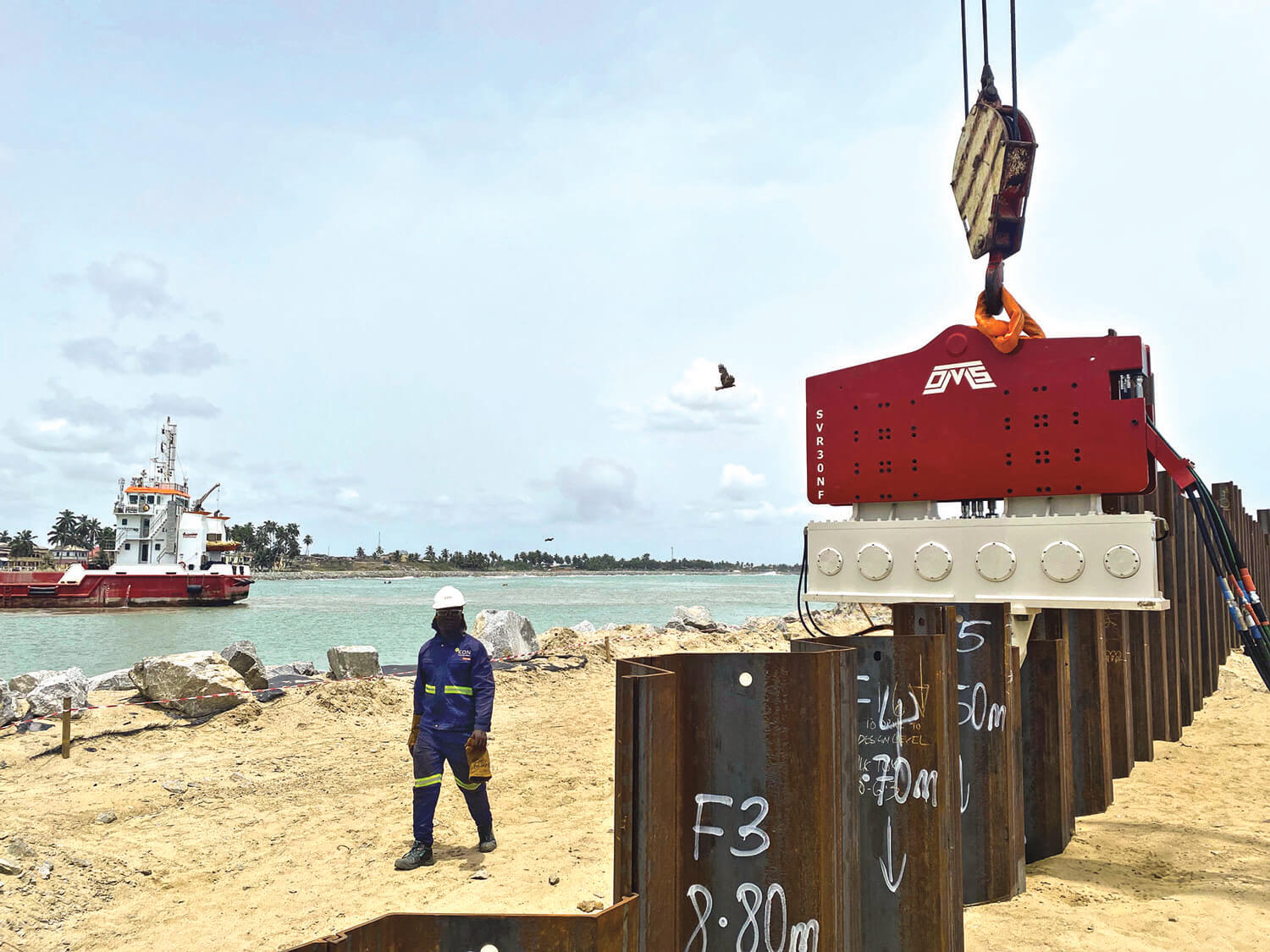
Hydraulic Clamps
Hydraulic Clamps as the Connection Point in Pile Driving
A vibratory pile driving system depends on more than centrifugal force and vibration frequency. The machine must transfer its dynamic output to the pile through a stable mechanical connection. If the clamp does not match the pile geometry, required clamping force or vibratory hammer configuration, energy transfer can become inefficient and operational risks can increase.
OMS hydraulic clamps provide the connection between the vibratory hammer and the pile. The product family includes three application-specific series:
Each series addresses a different pile geometry and gripping requirement. Selecting the correct hydraulic clamp therefore requires a system-level evaluation involving the pile, vibratory hammer, mounting method and jobsite conditions.
KCN Series Hydraulic Clamps for Pipe Piles
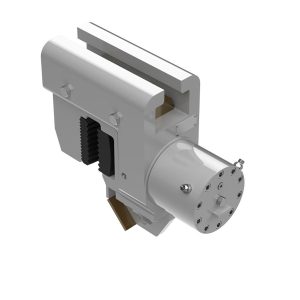
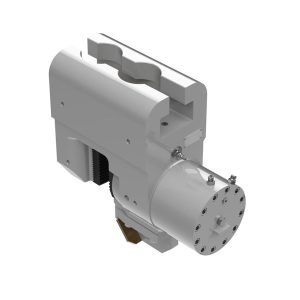
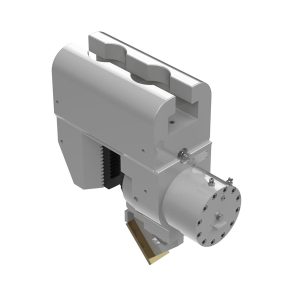
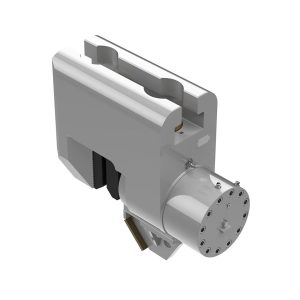
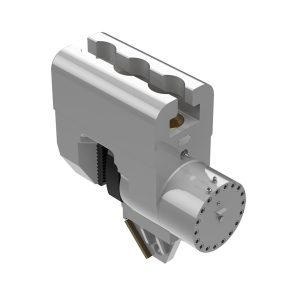
The KCN Series is designed for driving and extracting steel pipe piles. Pipe diameter, wall geometry, hammer capacity and the required beam arrangement are central selection parameters.
KCN clamps can be integrated into single- or double-clamp arrangements, depending on the vibratory hammer and pipe pile configuration. OMS offers H-type and T-type caisson beam solutions for different pipe diameters and equipment arrangements.
The KCN piston-locking system provides a secure connection between the vibratory hammer and clamp assembly. The specially alloyed steel construction supports the high loads associated with large pipe pile applications.
KCN selection should consider:
For crane-based pipe pile operations, KCN clamps can be evaluated together with the OMS Crane Suspended Vibratory Hammer Series. Final compatibility must be confirmed for the selected hammer, KCN model, caisson beam and pile dimensions.
SCN Series Hydraulic Clamps for Sheet Piles
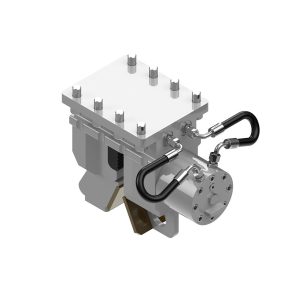 SCN 20 Hydraulic Clamp for Sheet Piles
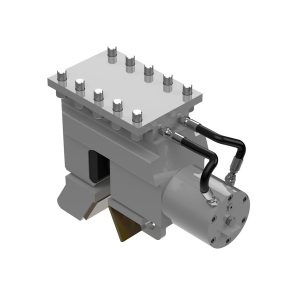 SCN 30 Hydraulic Clamp for Sheet Piles
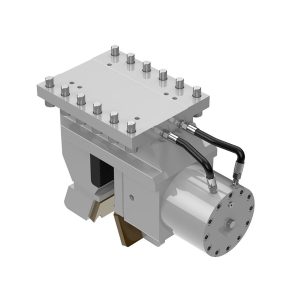 SCN 60 Hydraulic Clamp for Sheet Piles
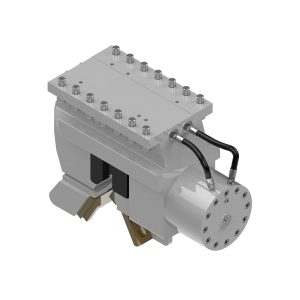 SCN 75 Hydraulic Clamp for Sheet Piles
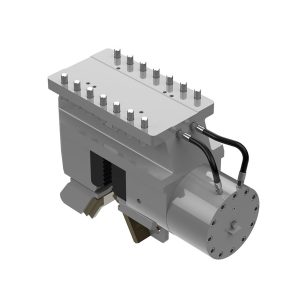 SCN 100 Hydraulic Clamp for Sheet Piles
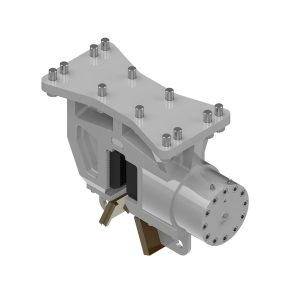 SCN 120 Hydraulic Clamp for Sheet Piles
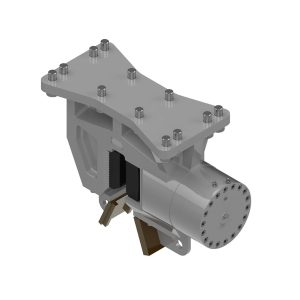 SCN 165 Hydraulic Clamp for Sheet Piles
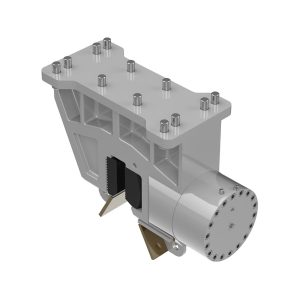 SCN 200 Hydraulic Clamp for Sheet Piles
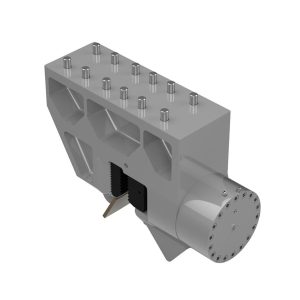 SCN 250 Hydraulic Clamp for Sheet Piles
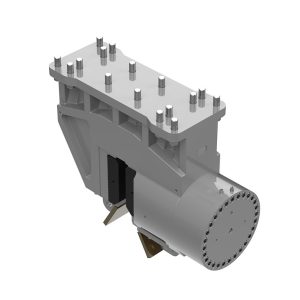 SCN 350 Hydraulic Clamp for Sheet Piles
The SCN Series is designed for driving and extracting single or double sheet piles. The clamp grips the sheet pile between one fixed and one movable jaw.
Sheet pile operations require accurate positioning because the available gripping area depends on the pile profile and selected clamping point. The guide arrangement helps position the sheet pile inside the clamp while protecting the jaw surfaces during placement.
SCN selection should consider:
SCN clamps can be paired with OMS Excavator-Mounted Vibratory Hammers for applications where excavator mobility, rapid positioning and direct operator control support the required workflow.
The hammer and clamp should be selected as one system. Choosing a clamp only by nominal clamping force does not account for pile geometry, machine pulling force, dynamic mass or the excavator’s hydraulic capability.
ACN Series Hydraulic Clamps for Timber Piles
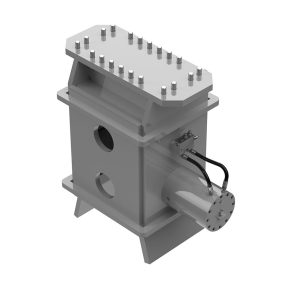
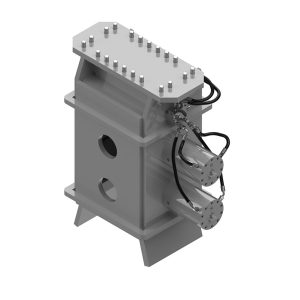
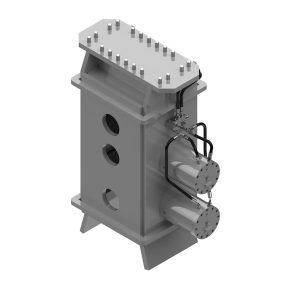
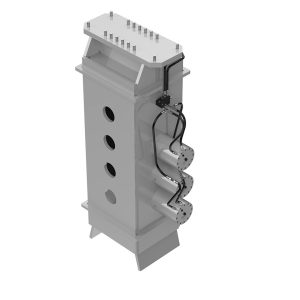
The ACN Series is developed for timber pile driving and extraction. Timber presents a different gripping condition from steel because its surface, dimensions and mechanical response can vary.
The ACN configuration distributes the clamping action according to the timber pile geometry. Correct pressure setting and alignment are particularly important to achieve sufficient grip without applying an unsuitable localized load to the pile.
ACN selection should consider:
Because timber characteristics may vary between piles, the application should be reviewed using the actual pile specification rather than nominal dimensions alone.
How OMS Hydraulic Clamps Work?
OMS hydraulic clamps use a fixed jaw and a movable jaw to grip the pile. A hydraulic cylinder moves the movable jaw toward the fixed jaw, creating the force required to hold the pile during driving or extraction.
The hydraulic cylinder can be controlled through the system control panel or remote control. Clamping and releasing take place within a few seconds, supporting an efficient operating cycle when the equipment is correctly configured.
A pilot-operated check valve helps maintain pressure inside the clamp cylinder. This is particularly important because the connection must remain stable while the pile and clamp are exposed to dynamic loads.
Depending on the model, OMS hydraulic clamps operate at pressures of up to 350 bar. The complete product family provides clamping forces from 203 kN to 3560 kN. The required value must be selected according to the pile type, hammer configuration, project load case and operating conditions.
Main Components of an OMS Hydraulic Clamp
Clamp Body
The clamp body supports the hydraulic and mechanical components. OMS manufactures the body from specially alloyed cast steel for heavy-duty pile driving and extraction conditions.
The body must maintain the alignment of the piston, cylinder and jaws while transmitting dynamic forces between the vibratory hammer and the pile.
Piston and Hydraulic Cylinder
The heat-treated alloy steel piston is precision-machined for operation under high hydraulic pressure and force. Its movement closes the movable jaw against the pile.
The cylinder supplies controlled piston movement and supports the piston during operation. A pilot-operated check valve maintains hydraulic pressure in the cylinder, helping preserve the clamping condition during the working cycle.
Fixed and Movable Jaws
The jaws create the direct contact with the pile. OMS produces them from wear-resistant alloy steel, while their toothed contact surfaces are designed to grip the pile securely.
Jaw condition has a direct influence on clamping reliability. Wear, contamination or unsuitable contact geometry can reduce grip and affect vibration transfer. Jaw inspection should therefore form part of the planned maintenance routine.
Pile Guides
Pile guides help position the pile inside the clamp body and protect the jaws during alignment. The contact areas use wear-resistant steel to support service life under repeated operating cycles.
Correct alignment before closing the clamp helps prevent unintended contact loads and supports uniform engagement of the jaw surfaces.
Improving Energy Transfer and Operating Efficiency
A correctly selected hydraulic clamp supports direct transmission of vibration from the hammer to the pile. Stable contact helps limit relative movement between the jaws and pile surface, reducing avoidable wear and energy loss.
Clamp selection also affects the operating cycle. Suitable guides, accessible hydraulic connections and remote-controlled opening and closing help operators position, clamp and release piles efficiently.
Before operation, the responsible team should verify:
Site-specific lifting plans, operating procedures and risk assessments remain necessary. Project configuration should be reviewed with the OMS Vibro technical team when pile geometry, installation angle or load conditions fall outside standard arrangements.
Application Scenarios
KCN hydraulic clamps are suited to pipe pile applications in marine structures, bridges, foundations and infrastructure works where the clamp system must accommodate the specified pipe diameter.
SCN hydraulic clamps support sheet pile installation and extraction for retaining structures, cofferdams, excavation support and infrastructure projects. Their compatibility with excavator-mounted vibratory hammers can benefit sites that require frequent machine repositioning.
ACN hydraulic clamps address timber pile applications where the pile material requires a dedicated gripping arrangement. In every scenario, the final system must be based on pile data, soil conditions and the required hammer performance.
Hydraulic Clamp Selection Criteria
A practical selection sequence begins with the pile:
- Identify whether the application involves pipe, sheet or timber piles.
- Confirm pile dimensions, geometry, material and gripping area.
- Define whether the operation involves driving, extraction or both.
- Select the required vibratory hammer type and mounting method.
- Calculate the necessary clamping force for the project load case.
- Confirm pressure, hydraulic connection and control compatibility.
- Review beam, guide and single- or double-clamp requirements.
- Verify handling, lifting and maintenance access at the jobsite.
Selection should not rely on one parameter alone. Clamp force, pile geometry, vibratory hammer output and site operations must be evaluated together.
Frequently Asked Questions
KCN clamps are designed for pipe piles, SCN clamps for sheet piles and ACN clamps for timber piles. Each series uses a gripping configuration suited to its intended pile geometry.
Yes. The KCN, SCN and ACN product families are designed for pile driving and extraction when correctly matched with the pile and vibratory hammer.
The valve helps maintain pressure inside the clamping cylinder, supporting stable engagement between the clamp jaws and the pile during operation.
Yes. SCN clamps can be configured with compatible OMS excavator-mounted vibratory hammers. The hammer model, clamp capacity and sheet pile geometry must be evaluated together.
The selection depends on pipe diameter, wall thickness, hammer model, beam arrangement and required clamping force. KCN single- or double-clamp configurations can be evaluated according to these parameters.
OMS can evaluate custom clamp configurations according to project requirements. The technical review should include pile drawings, dimensions, material information and operating conditions.
OMS Vibro Value Propositions
The hydraulic clamp is a critical part of the vibratory pile driving system because it transfers the machine’s dynamic output directly to the pile. Selecting between KCN, SCN and ACN requires more than identifying the pile material. The assessment must also cover pile geometry, clamping force, hammer compatibility, mounting method and site workflow.
Contact the OMS Vibro technical team to evaluate the correct hydraulic clamp and vibratory hammer configuration for your project.
Get professional advice to find the most efficient equipment for your application.