


Vibratory Hammers
OMS Vibro Hammer Types for Different Ground Conditions
Not every ground condition responds to a vibro hammer in the same way. The performance of a vibro hammer depends on how well it is configured for the specific ground conditions. Application configuration is the key factor in achieving reliable results.
In loose and sandy soils, operational consistency and stability are the primary priorities. Vibration must be transmitted in a controlled and efficient manner. In dense and hard ground, stability is just as important as driving force. The system must maintain consistent performance underload.
On sensitive or urban construction sites, vibration control becomes a critical requirement. The configuration is optimized with environmental constraints in mind. The vibro hammer type, clamp configuration, and power pack capacity must be evaluated as an integrated system. Ground behavior directly influences system selection.
A properly configured vibro hammer solution minimizes performance losses. It enables more predictable and efficient operations. Success across different ground conditions is not achieved by using a single machine. It comes from selecting the right configuration for the specific application.
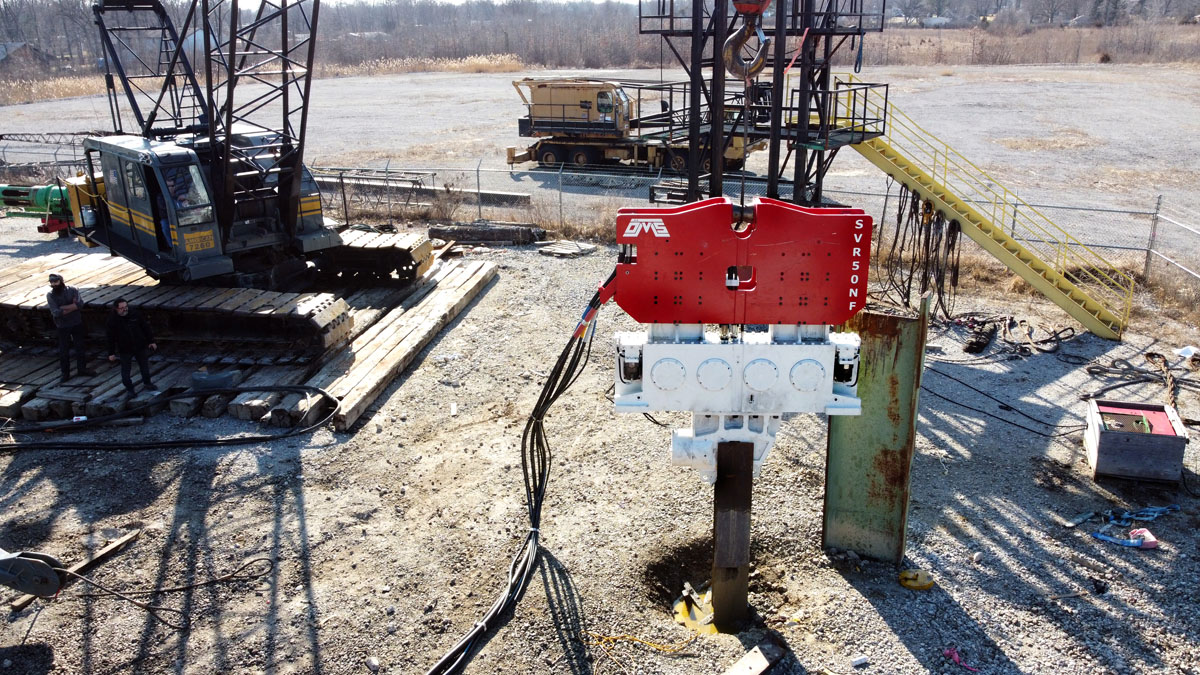
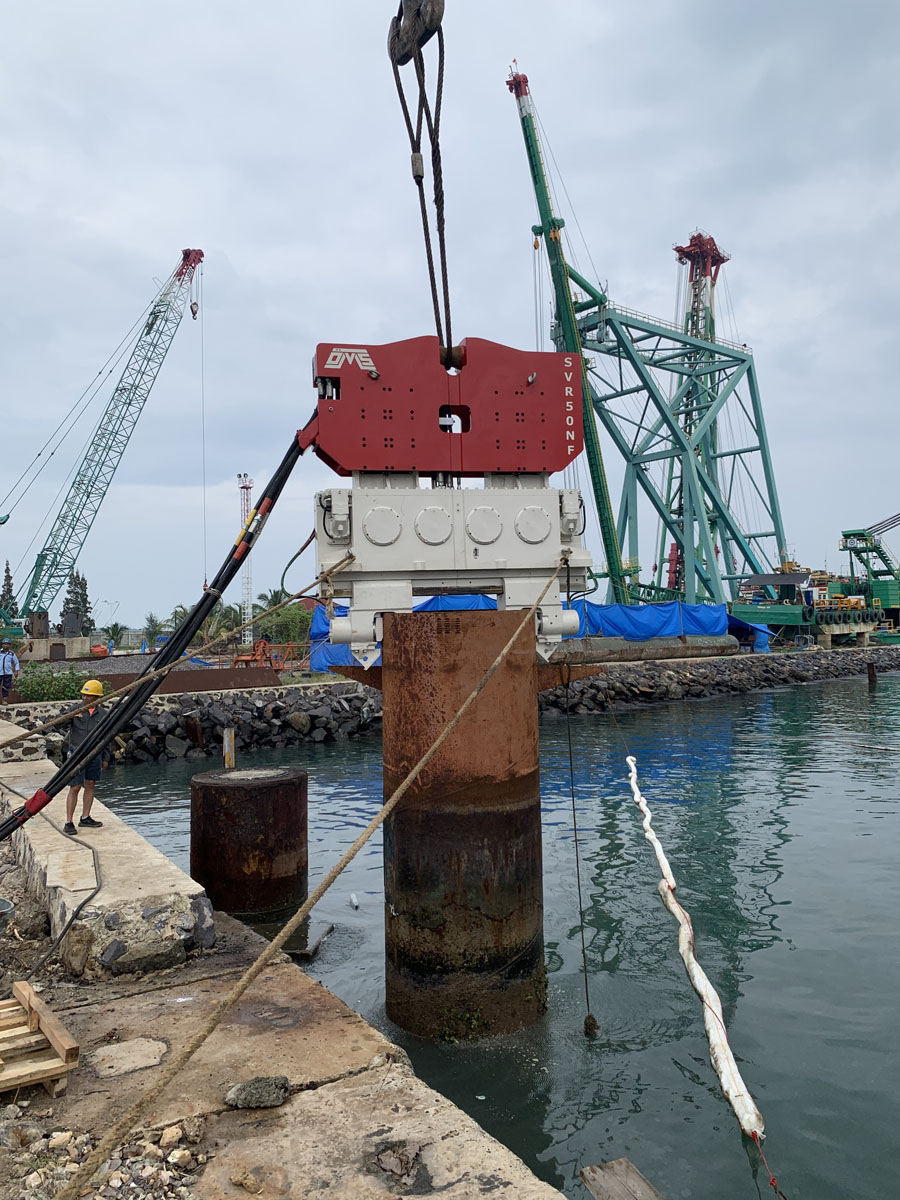
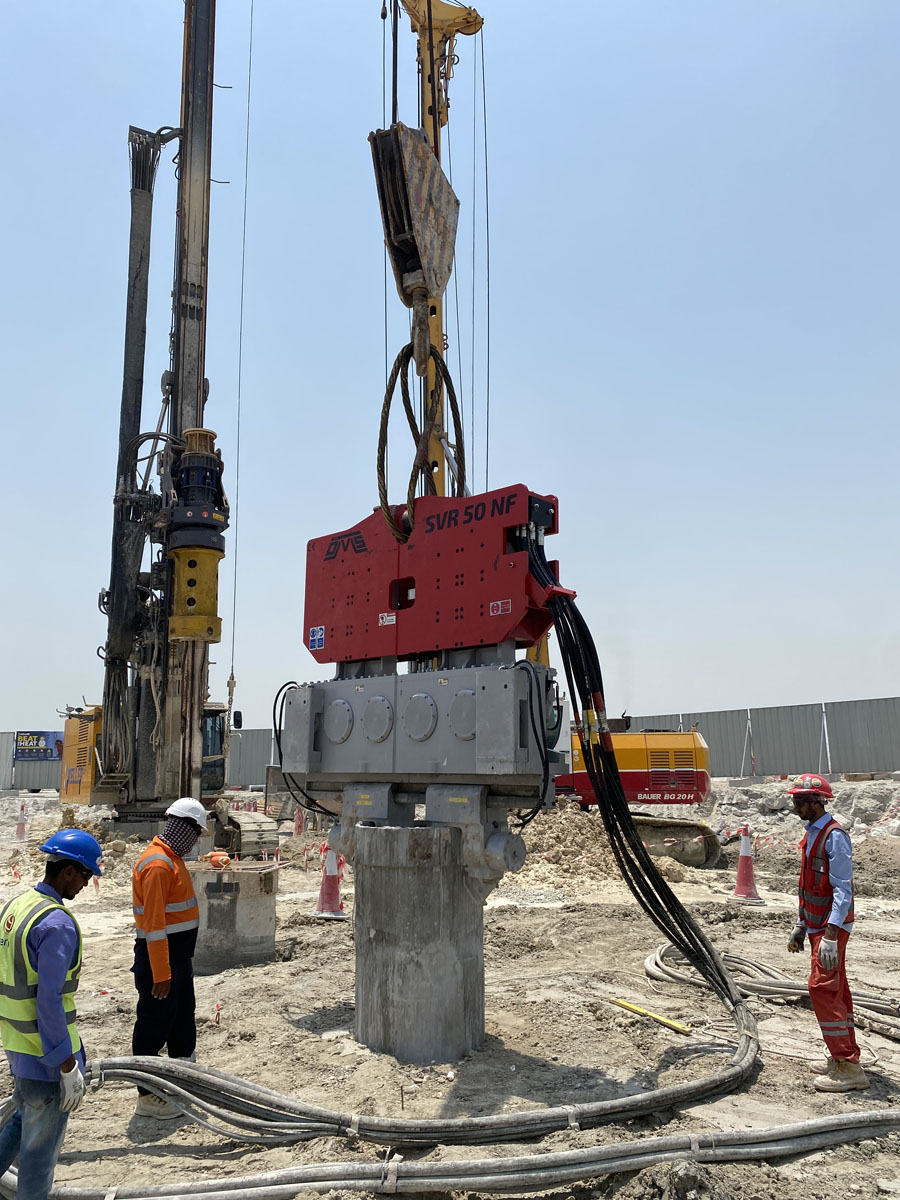
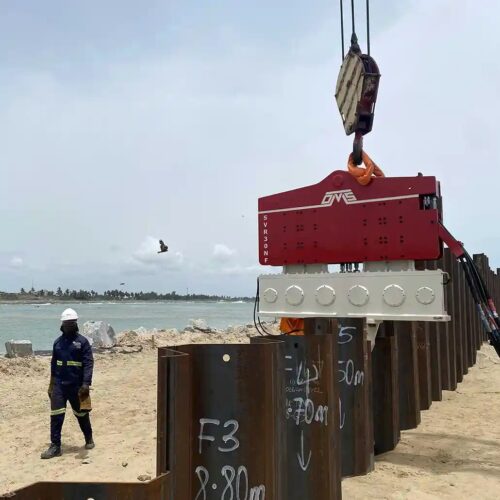
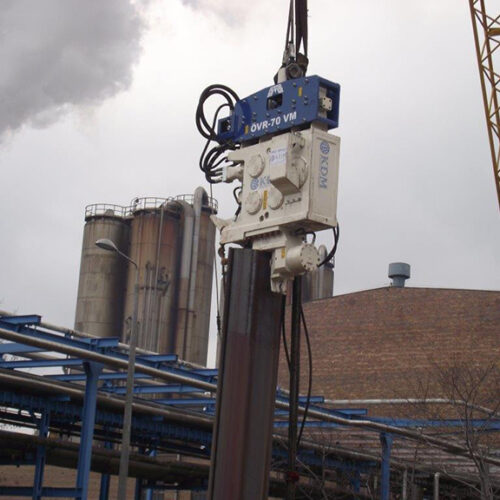
Normal Frequency Crane-Suspended Vibratory Hammers: SVR NF Series
The SVR Series crane-suspended vibratory hammer is designed for pile-driving and extraction operations that require high eccentric moment and vibration amplitude.
The hammer hangs from a crane and connects to the pile through an application-specific KCN hydraulic clamps. This arrangement makes the SVR NF Series suitable for projects involving long or heavy piles and working conditions where crane access forms part of the construction method.
Typical pile applications include:
Crane-suspended normal-frequency hammers can support marine works, ports, bridges, canals, retaining structures, pipeline infrastructure and general foundation construction.
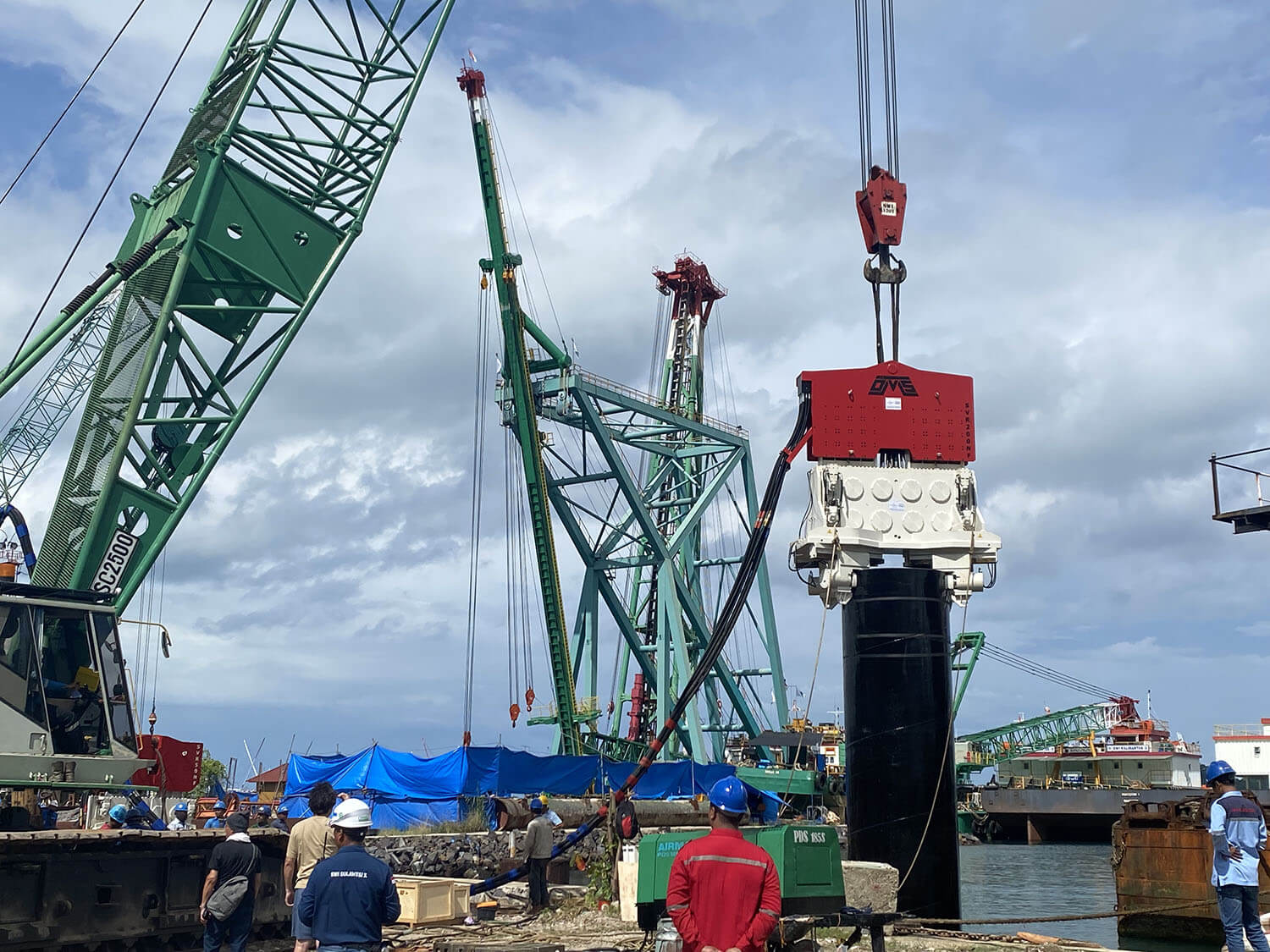
Resonance-Free Crane-Suspended Vibratory Hammers: SVR VM Series
The SVR VM Series uses variable-moment technology to control the eccentric moment during startup and shutdown. The phase-shifting mechanism allows vibration to begin and end with the eccentric moment reduced, limiting the passage of the system through potentially critical resonance ranges.
During normal operation, the eccentric moment can be adjusted according to the soil response and project requirements. This provides greater control over the vibration transmitted to the pile and surrounding ground.
The SVR VM Series is particularly relevant where the project is close to:
“Resonance-free” does not mean that the operation produces no ground vibration. It describes controlled startup and shutdown behaviour. Site vibration limits, monitoring requirements and the condition of nearby structures must still be evaluated by the responsible project engineers.
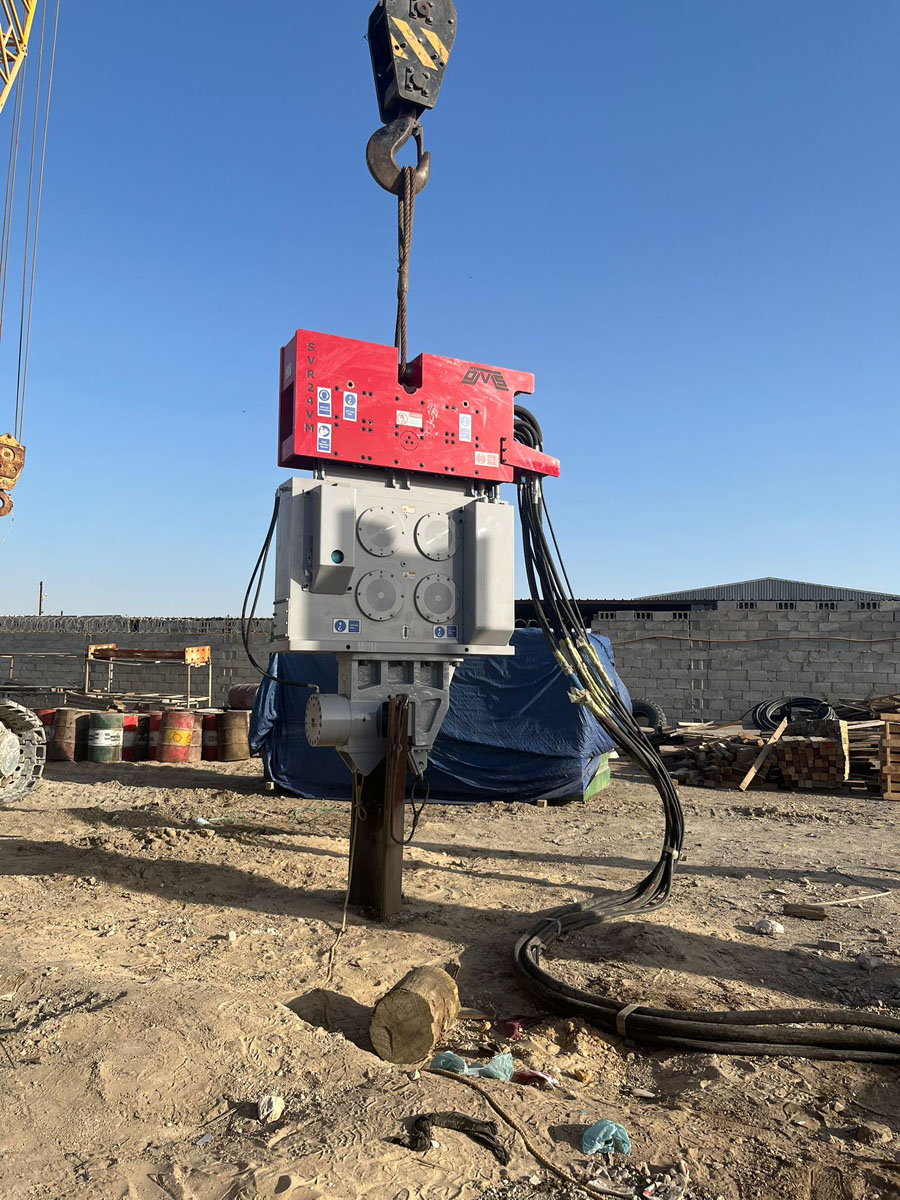
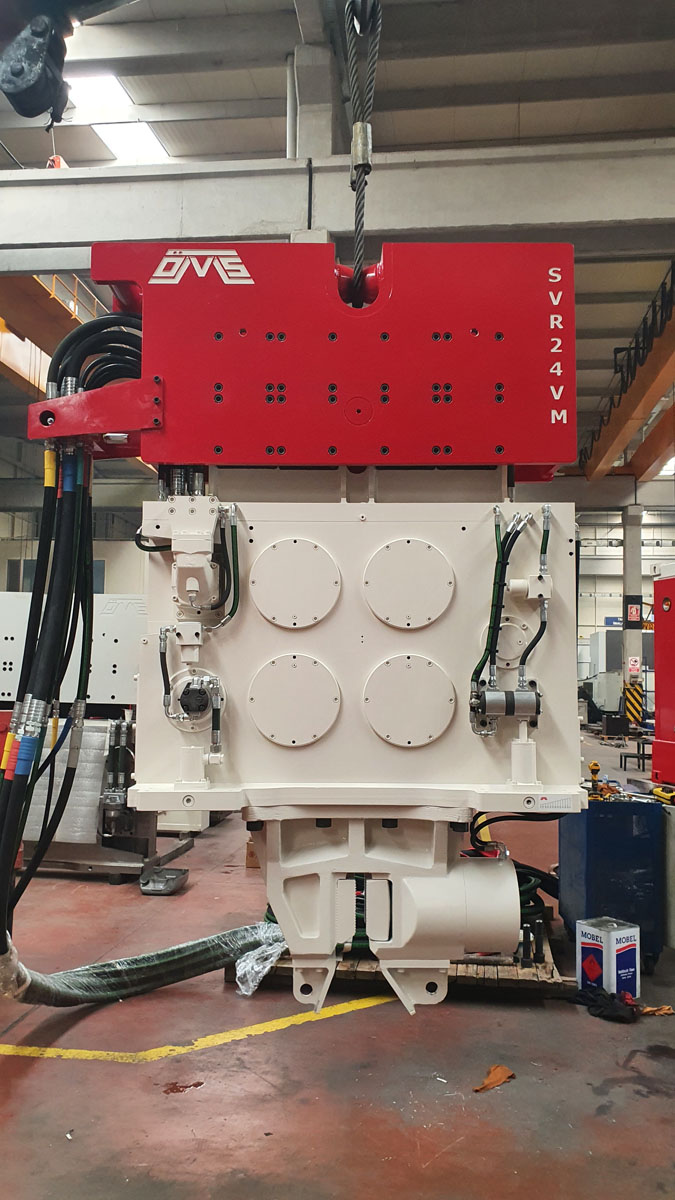
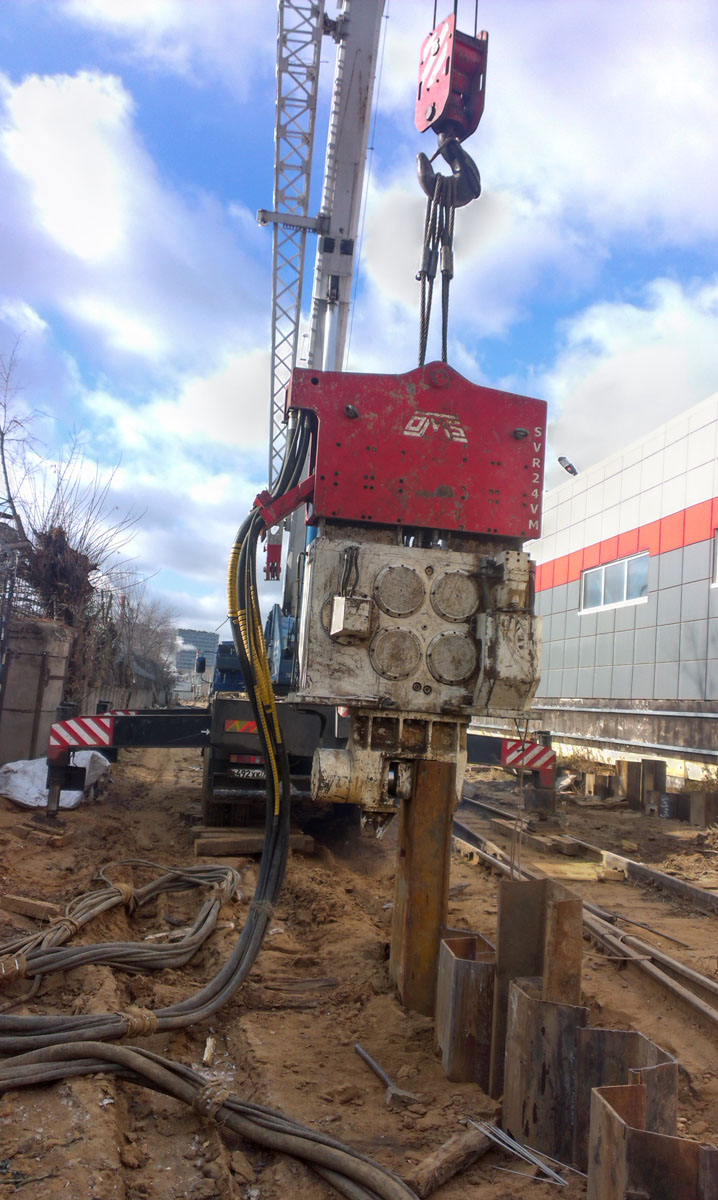
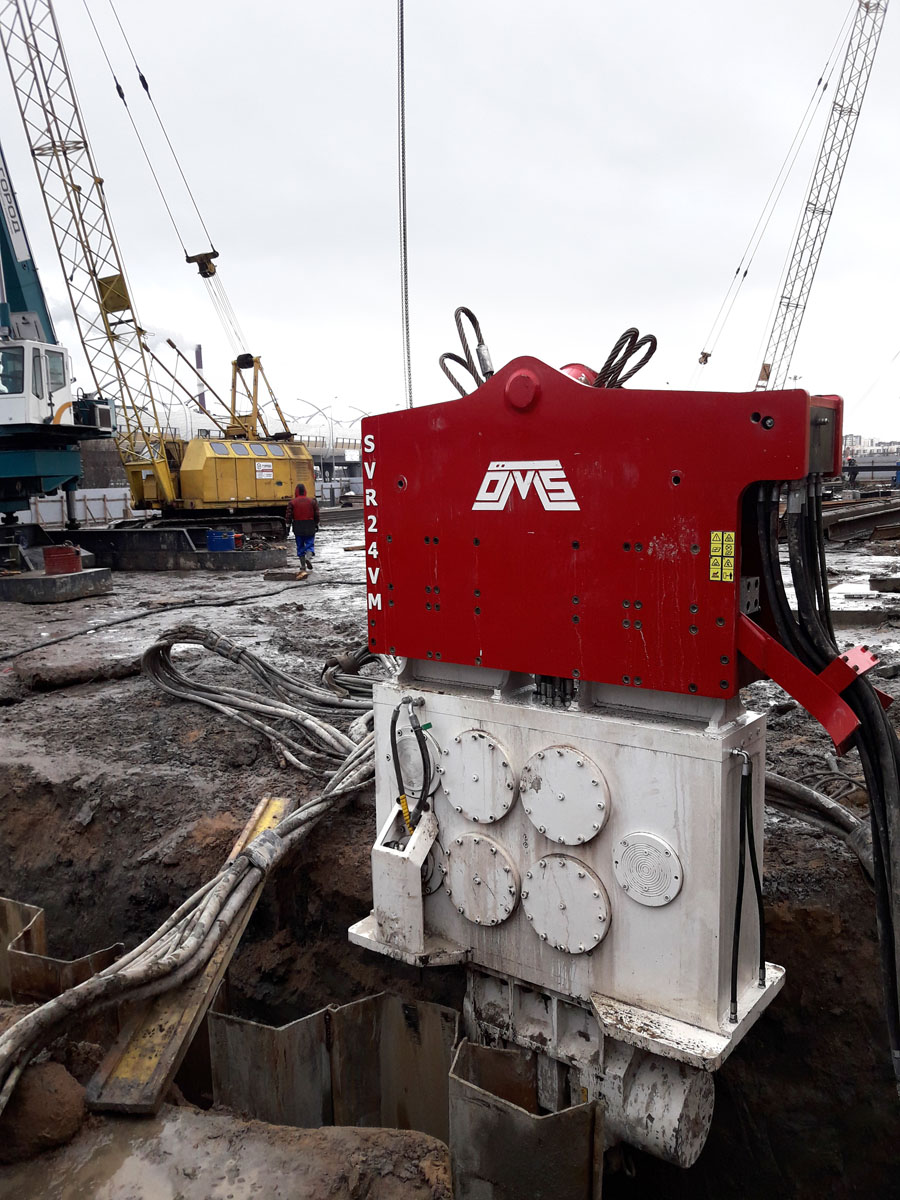
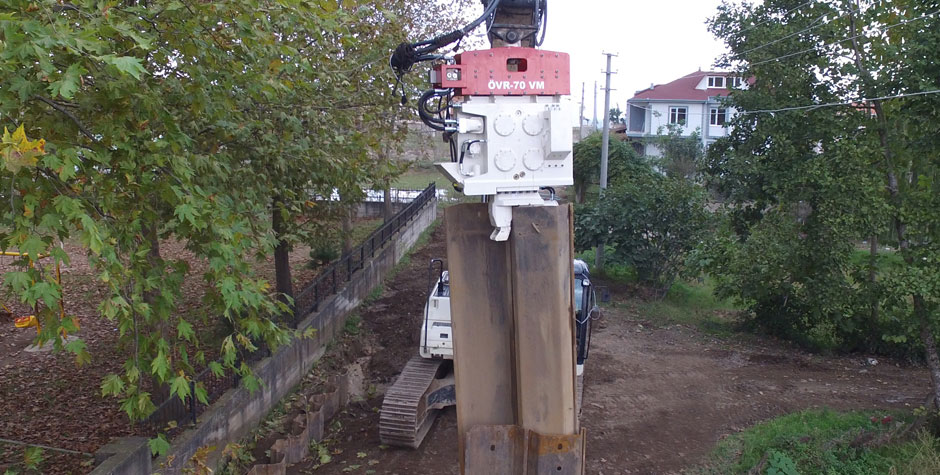
Resonance-Free Excavator-Mounted Vibratory Hammers: OVR VM Series
The OVR VM configuration combines variable-moment operation with excavator mounting. It is intended for projects that require the mobility and positioning capability of an excavator together with controlled startup and shutdown.
This arrangement can be advantageous where the work area changes frequently or where crane deployment would complicate the construction sequence. The excavator can approach the pile position, control the hammer orientation and apply boom force during driving or extraction.
Successful integration requires confirmation of:
The excavator must remain stable throughout handling, pitching, driving and extraction. Carrier suitability should therefore be assessed for the actual working radius rather than only by nominal excavator class.
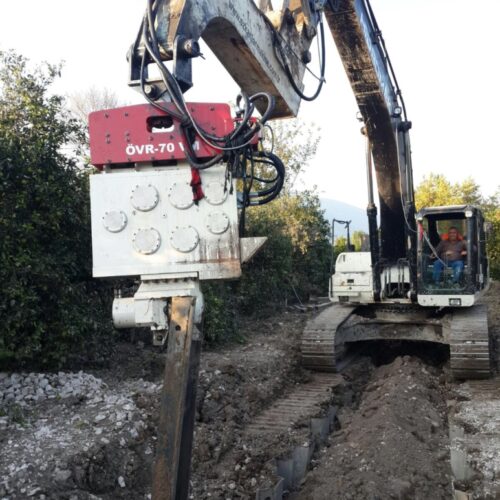
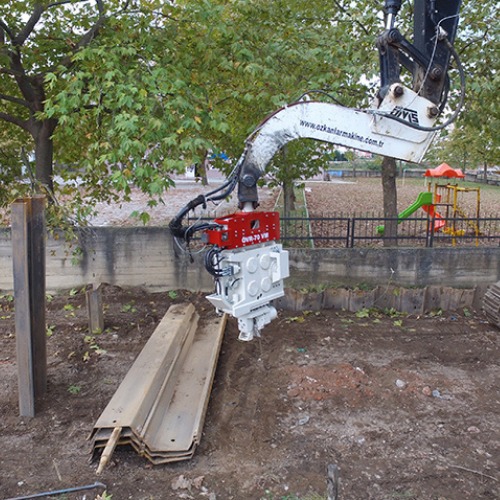
Standard Excavator-Mounted Vibratory Hammers: OVR S Series
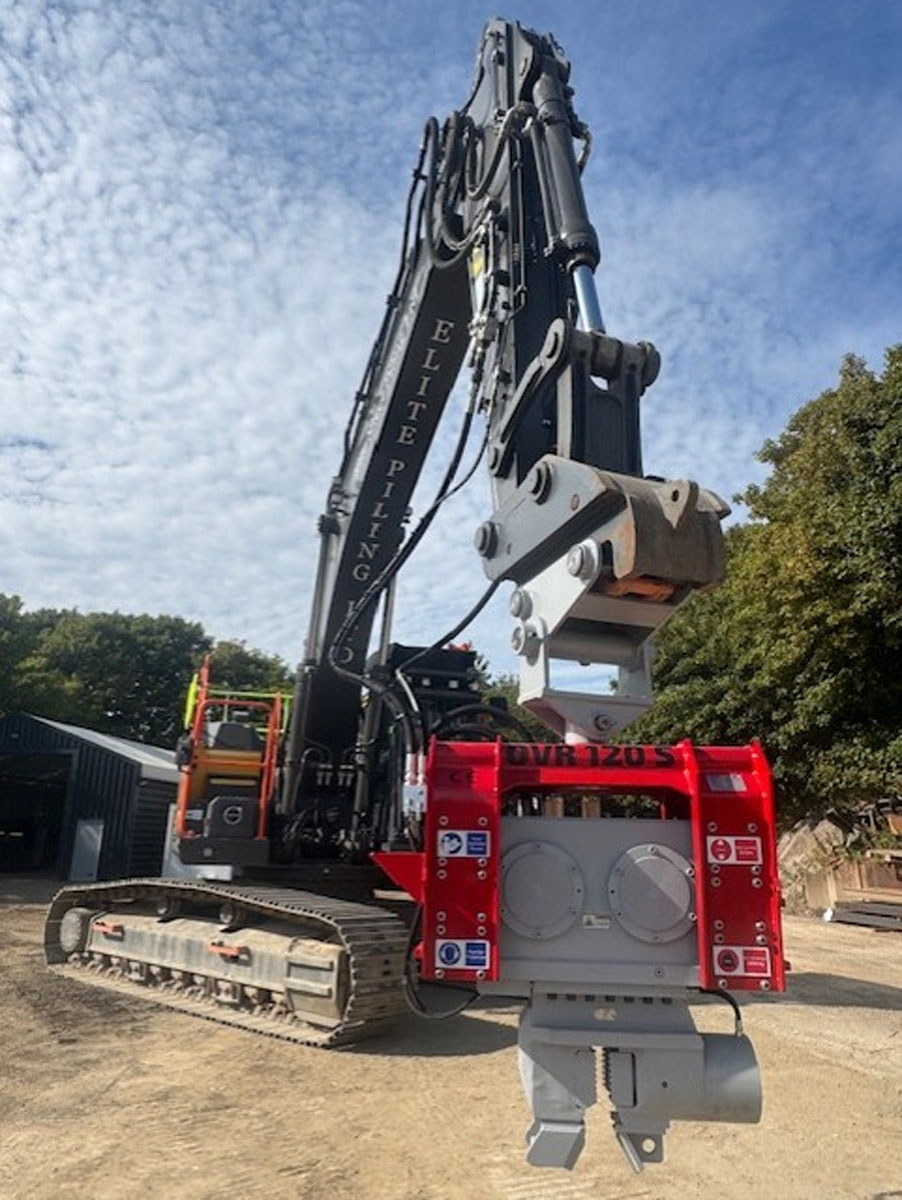
The OVR S Series excavator-mounted vibratory hammer is hydraulically driven by the excavator and does not require a separate hydraulic power pack when the carrier provides the necessary hydraulic performance.
This configuration supports a compact site workflow. The excavator positions the hammer, aligns the pile and supplies the force required for installation or extraction. It is suitable for general piling operations where variable-moment control is not a project requirement.
Typical applications include:
Compared with a crane-suspended arrangement, an excavator-mounted vibratory hammer can reduce the number of separate machines involved in positioning and operating the hammer. Actual productivity, however, still depends on pile handling, site access, soil behaviour and operator coordination.
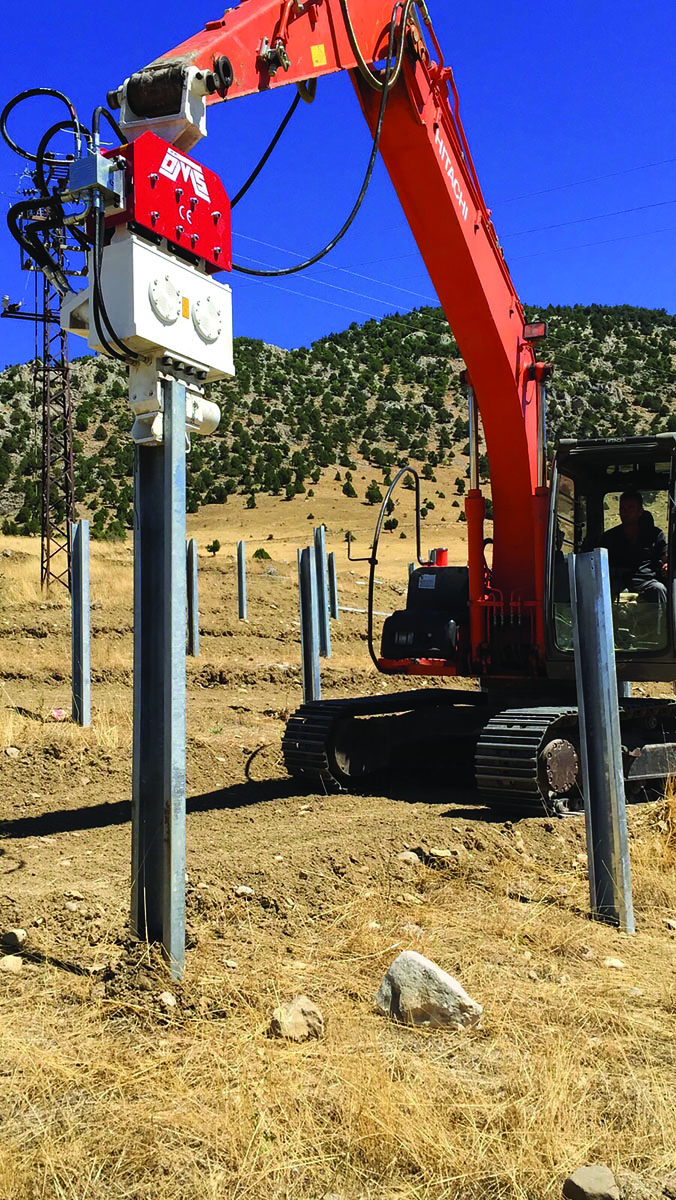
Excavator-Mounted Side Grip Vibratory Hammers: OVR SG Series
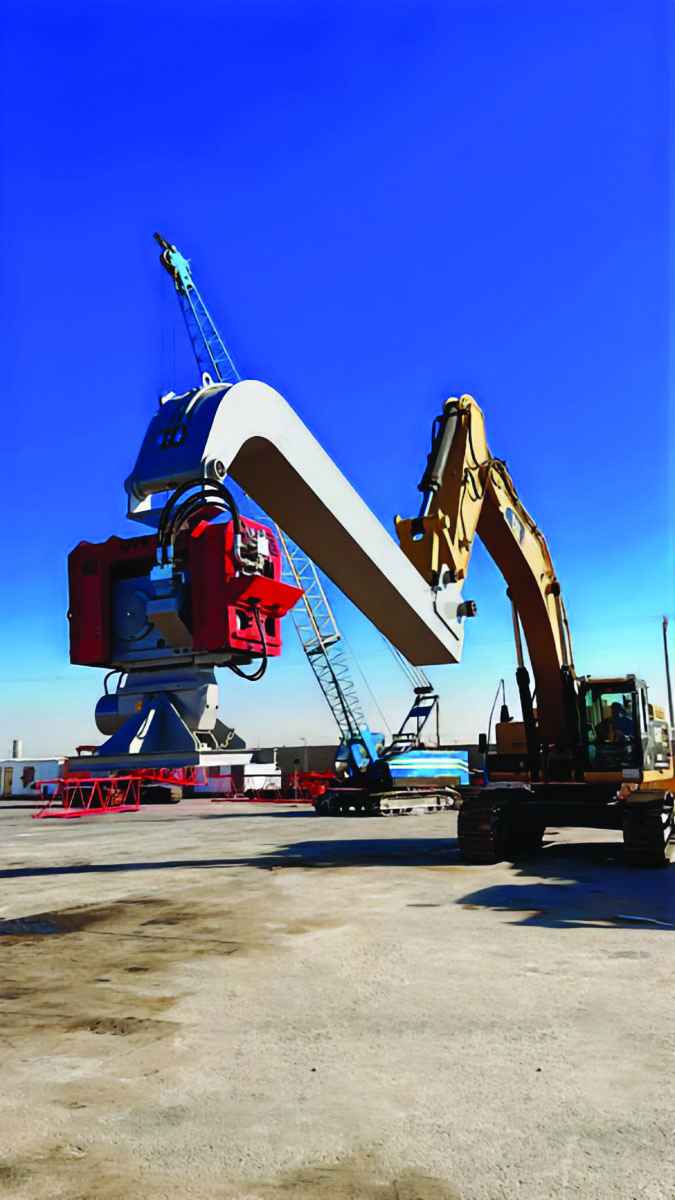
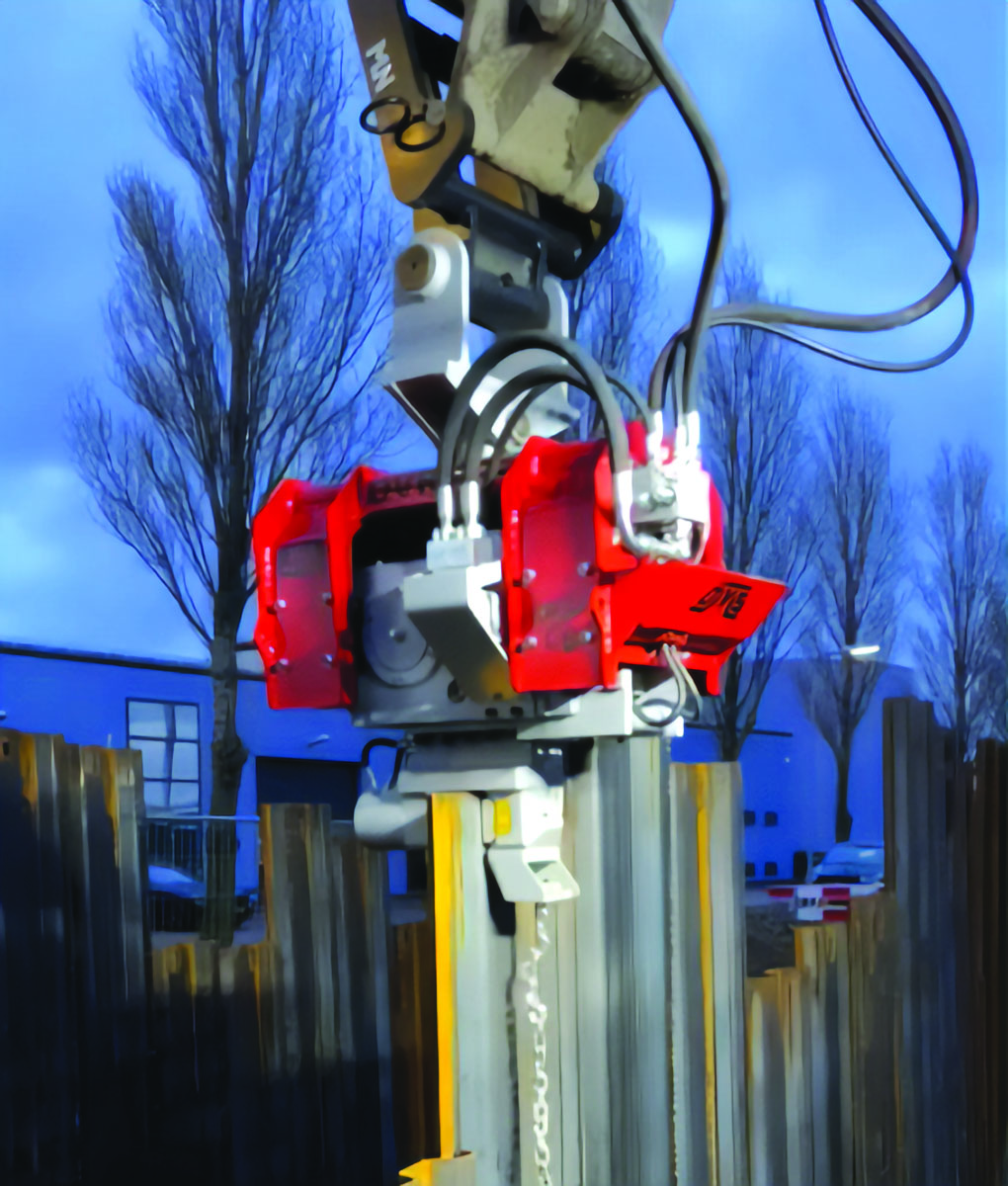
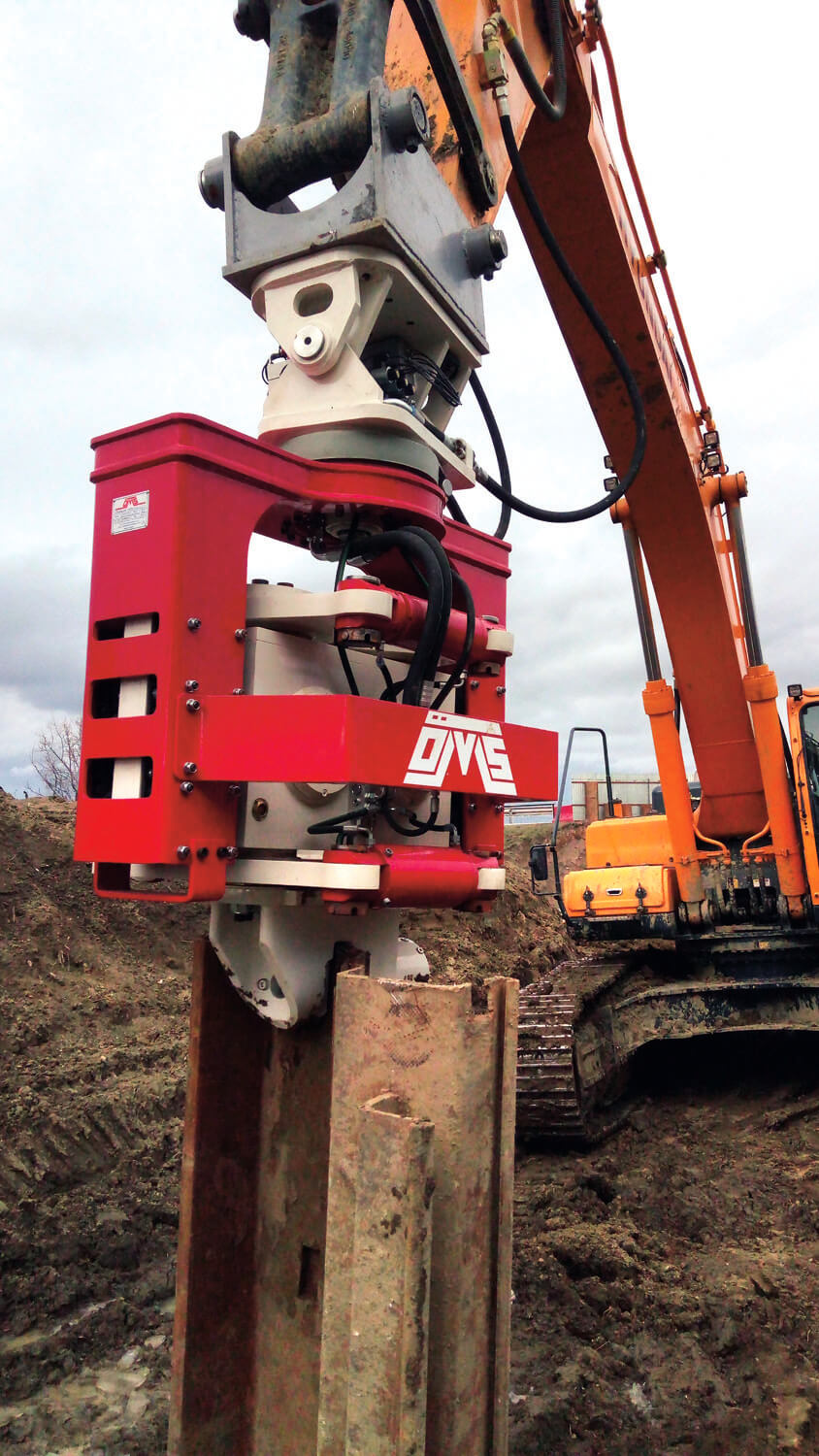
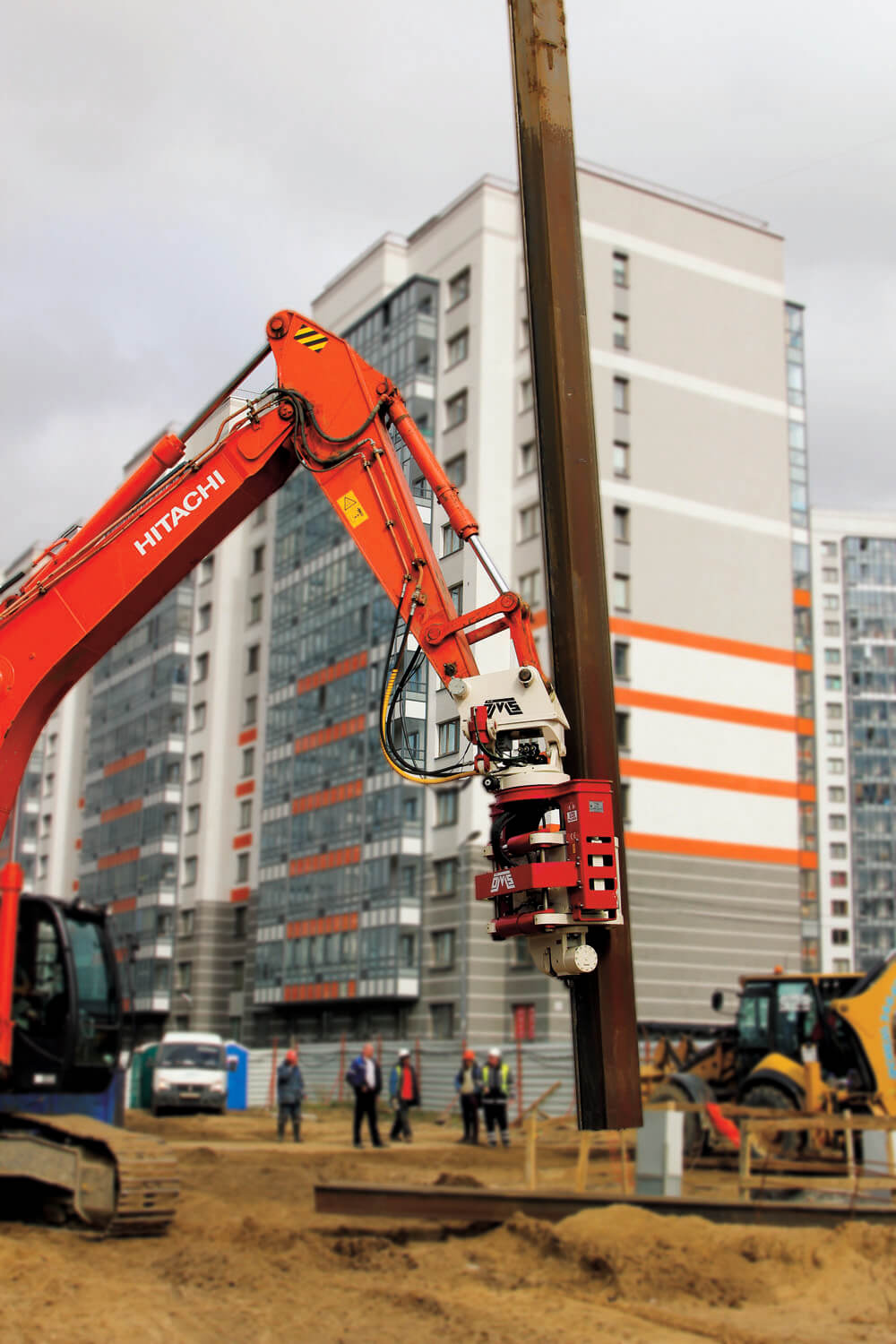
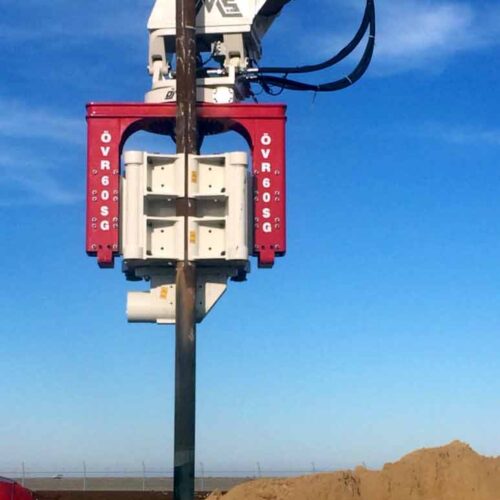
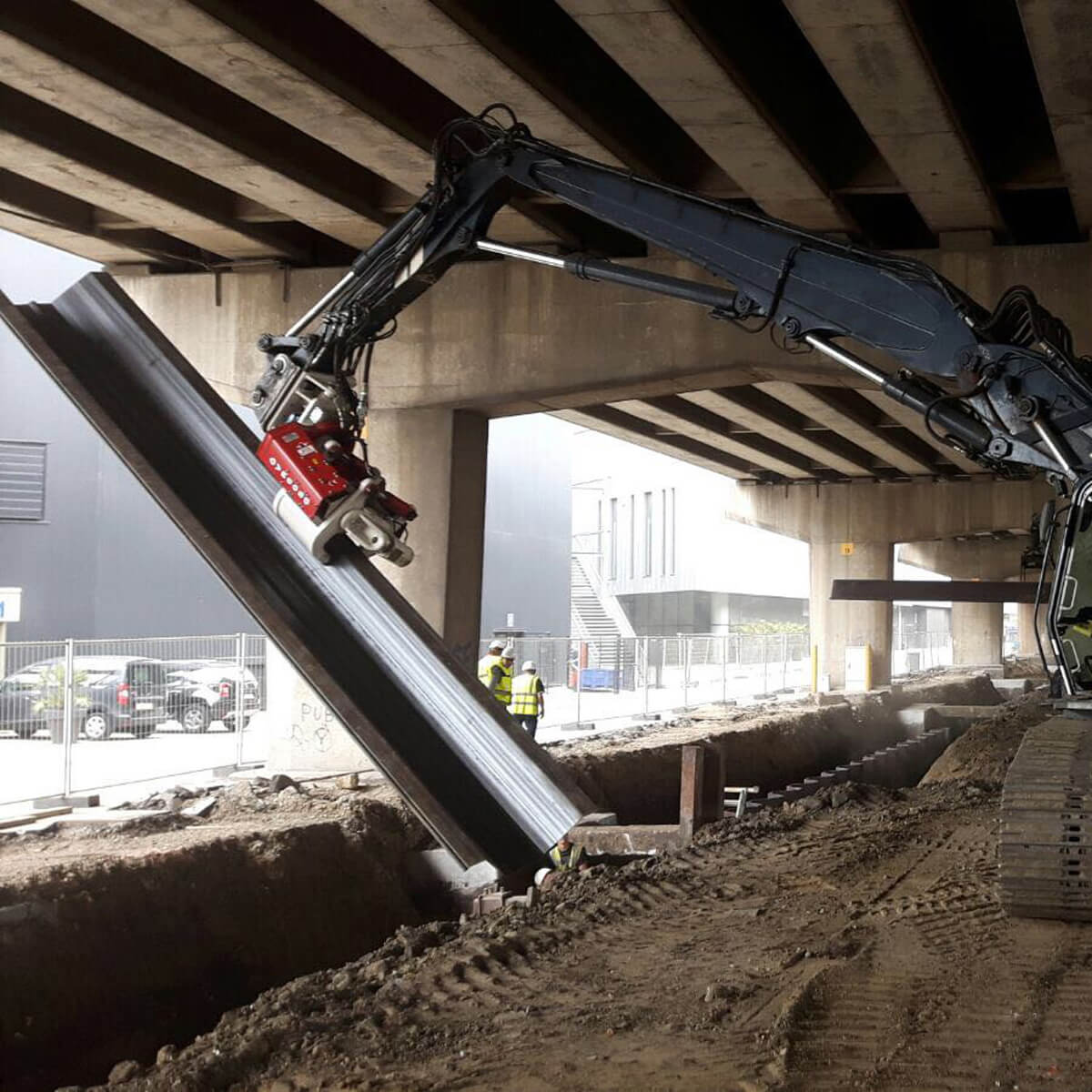
The OMS Side Grip pile driver combines gripping arms with a bottom clamp. The side-grip mechanism allows the machine to handle, lift, pitch and vibrate compatible piles without requiring the pile to be presented vertically to the bottom clamp at the start of every cycle.
The side arms can be configured for sheet piles or tubular piles. Depending on the pile and operating stage, the machine can grip from the side for handling and initial installation, then use the bottom clamp for continued driving or extraction.
This workflow is particularly useful for:
The side-grip system can streamline the handling-to-driving sequence, but the correct arm, pad and clamp configuration remains essential. Pile dimensions must be checked against the selected OVR SG model before operation.
Frequently Asked Questions
A normal-frequency hammer operates with a fixed eccentric-moment arrangement. A variable-moment hammer controls the eccentric moment during startup, operation and shutdown, enabling resonance-free starting and stopping.
No single configuration should be assumed suitable for every pile. The hammer, clamp, jaw arrangement, carrier and hydraulic power source must be selected according to pile geometry, weight, soil conditions and depth.
No. The technology controls the eccentric moment during startup and shutdown to avoid critical resonance behaviour. Vibration remains necessary during pile driving, and project-specific monitoring may still be required.
They normally use the excavator’s hydraulic system. The available pressure, flow, return-line capacity and drain arrangement must meet the selected hammer’s requirements. Crane-suspended models generally use dedicated hydraulic power packs.
A side grip machine can handle, pitch, drive and extract compatible piles using an excavator. This can improve the operating sequence, particularly where headroom, crane access or working space is limited.
OMS Vibro Engineering Value
A vibratory hammer should be treated as part of a complete pile-driving system rather than as an isolated machine. Hammer performance depends on the relationship between the vibration mechanism, carrier, hydraulic source, clamp, pile and ground conditions.
OMS Vibro provides normal-frequency SVR NF, variable-moment SVR VM and OVR VM, standard excavator-mounted OVR S, and OVR SG Side Grip solutions. This range allows contractors and project engineers to select a configuration based on actual installation conditions, vibration constraints and operational workflow.
For model selection, share the pile dimensions, soil information, required depth, carrier data and project limitations with the OMS Vibro technical team.
Get professional advice to find the most efficient equipment for your application.