


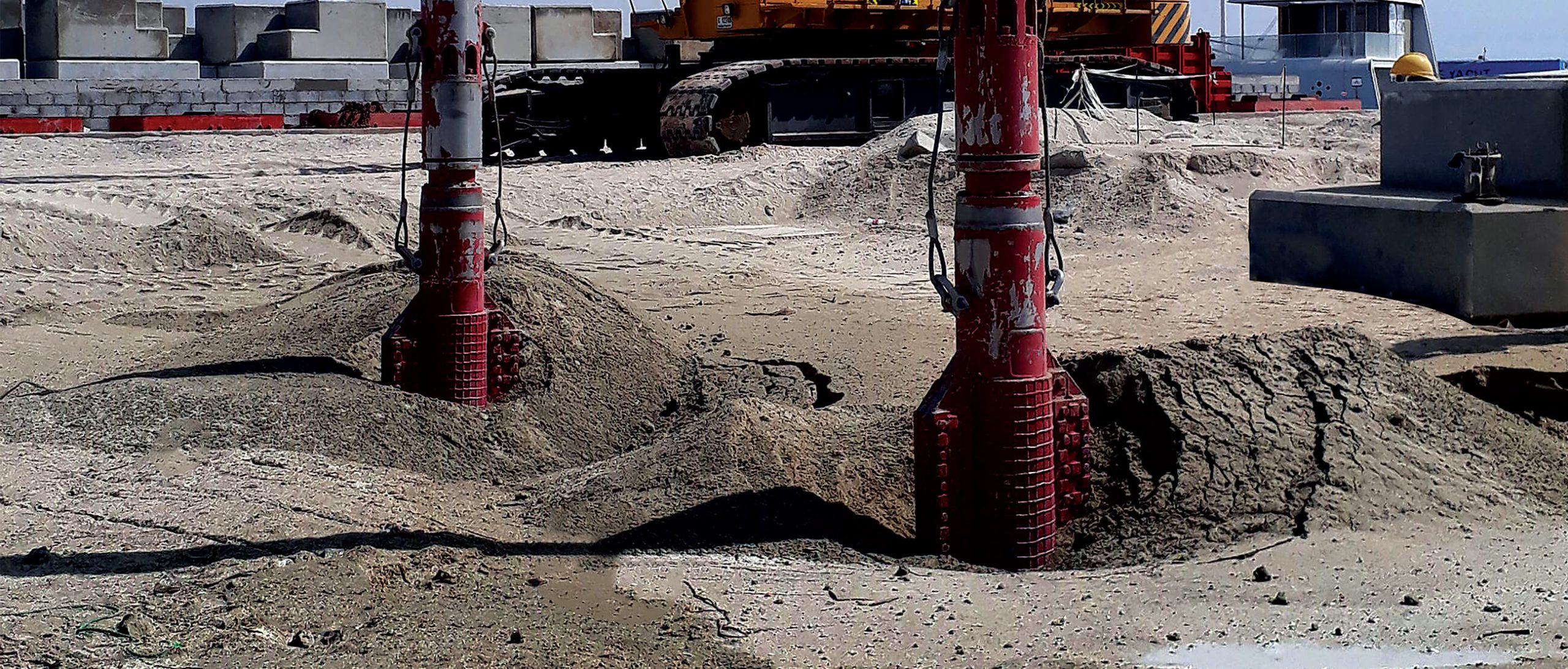
Vibroflot Systems
Ground Improvement with OMS Vibroflot Systems
Weak, loose or highly compressible soil can create significant risks for infrastructure and industrial construction projects. Insufficient bearing capacity, excessive settlement and liquefaction susceptibility may affect both construction efficiency and the long-term performance of the completed structure.
Deep ground improvement provides an alternative approach where project conditions do not support direct construction on the existing soil. However, successful execution depends on more than vibration alone. Soil characteristics, treatment depth, aggregate delivery, carrier selection, penetration control and production monitoring must be evaluated as parts of one integrated process.
OMS Vibroflot systems are developed for two principal ground improvement methods:
- Vibro compaction using a top feed process
- Vibro replacement using a bottom feed process
The OMS product family includes free-hanging, drill rig or leader-mounted, and excavator-mounted configurations. The appropriate system depends on the ground conditions, required treatment method, working depth, available carrier equipment and site constraints.
How Does an OMS Vibroflot Work?
An OMS Vibroflot is a hydraulically driven probe that transfers vibration directly into the surrounding soil. The rotating eccentric system inside the probe generates horizontal vibration, while water or compressed air assists penetration depending on the selected method.
The process changes according to the soil type and engineering objective.
In loose granular soils, vibration helps rearrange the particles into a denser structure. This method is known as vibro compaction.
In cohesive soils or soils with a high fines content, the process introduces and compacts gravel or crushed stone to construct load-bearing stone columns. This method is known as vibro replacement.
Although both methods use a Vibroflot probe, their material-feeding arrangements and typical fields of application are different.
Top Feed Vibroflot for Vibro Compaction
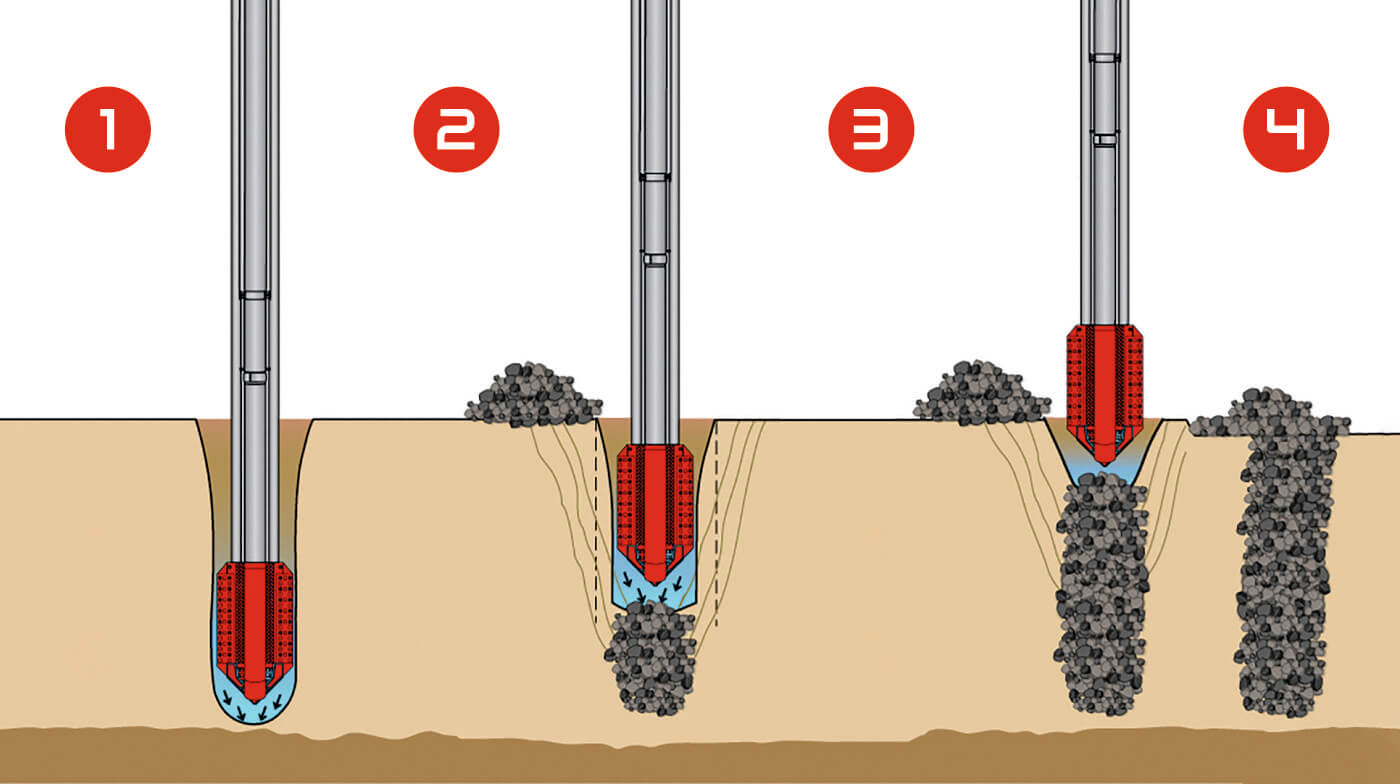
1. Penetration
The OMS vibroflot probe is penetrated to the depth required by the project with the vibration effect and water jet.
2. Compaction
Compaction is a process that continues as the vibroflot is pulled up. The probe is pulled up to a certain level and the ground walls are compressed with an action like penetrating again.
3. Refill
After the ground is slightly compressed, the same as the project’s gravel or different type of granular material is poured into the cavity by feeding on the top.The process is continued by moving the probe up and down the soil and vibrating it at the same time.
4. Finishing
After the process is completed, the compacted gravel column and settlement of the soil had achieved.
The OMS top feed system is primarily associated with vibro compaction in loose granular soils. It is particularly relevant to sand-like soil deposits where vibration can rearrange the particles and increase soil density.
During penetration, the OMS Vibroflot enters the ground through the combined effect of vibration and a water jet. After reaching the project depth, the probe is withdrawn in controlled stages. The surrounding soil densifies as the probe moves upward and repeatedly penetrates the treatment zone.
Granular material can then be supplied from ground level into the cavity created around the probe. The material reaches the treatment area from the top, which gives the method its name.
The typical OMS top feed configurations are:
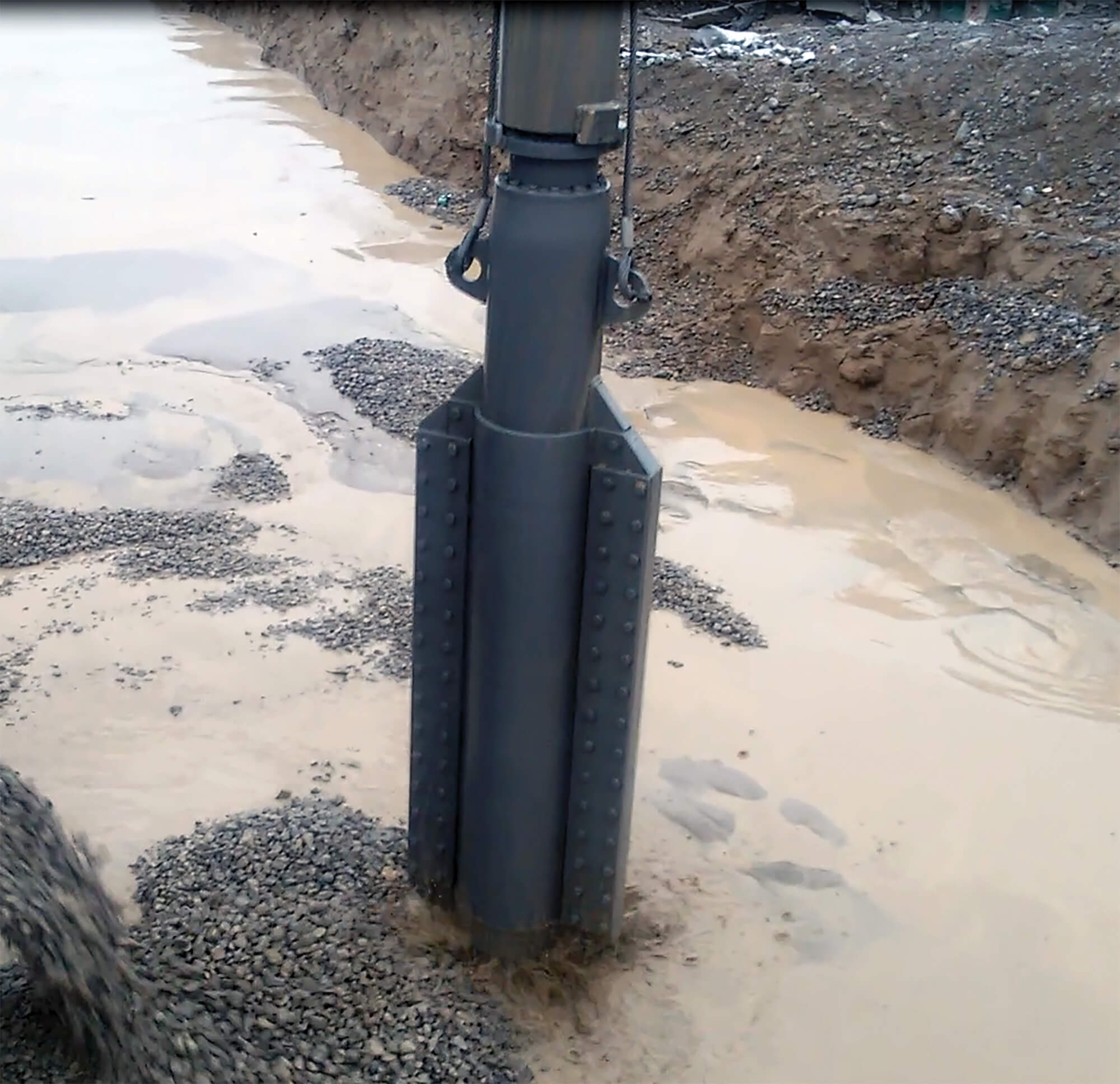
Single Free-Hanging Vibroflot
A single OMS Vibroflot probe is suspended from a crane. This arrangement provides operational flexibility and can be suitable for medium- and smaller-scale projects or applications requiring greater treatment depth.
The single system uses interchangeable components also found in the tandem arrangement. Crane capacity, lifting height, treatment depth and suspended system weight must be assessed together during configuration.
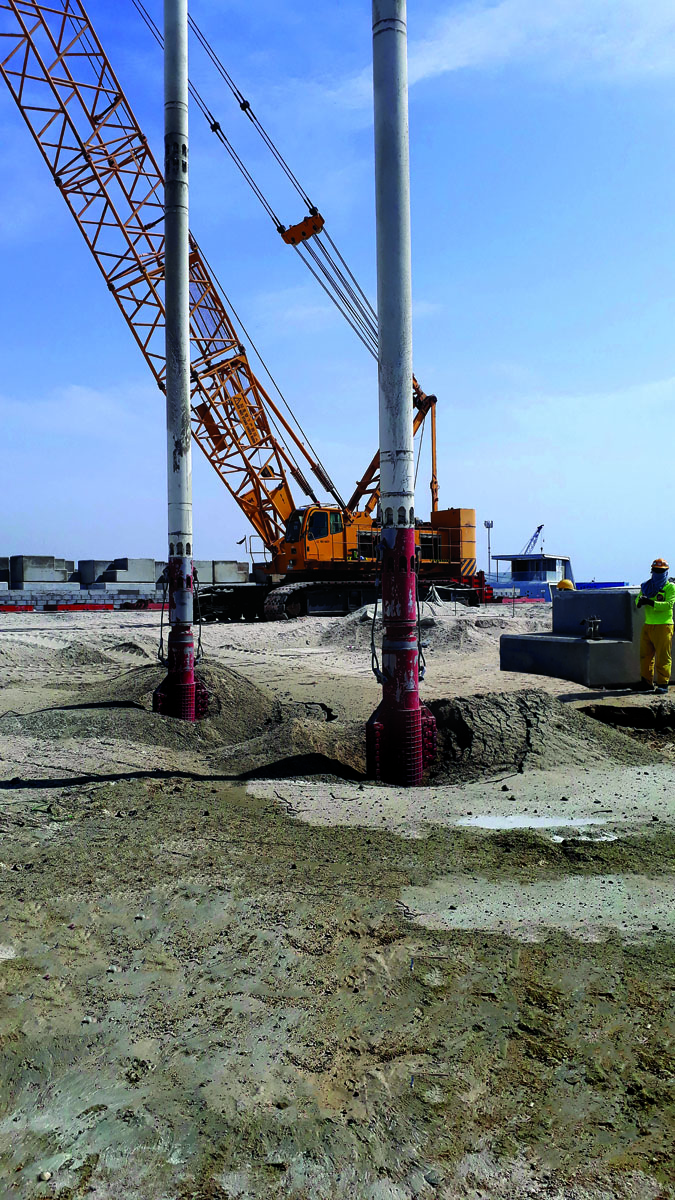
Tandem Free-Hanging Vibroflot
The tandem configuration uses two Vibroflot probes suspended from the same crane. Treating two points through one carrier arrangement can support production efficiency on large working platforms.
OMS identifies land reclamation, railway and highway projects among the typical application areas for this configuration. Crane capacity and rigging geometry remain critical because the carrier must safely manage the complete suspended assembly.
Bottom Feed Vibroflot for Vibro Replacement
The OMS bottom feed system is designed for vibro replacement and stone column construction. This method can be used in cohesive soils and granular soils with a high fines content, including ground that does not respond effectively to vibro compaction.
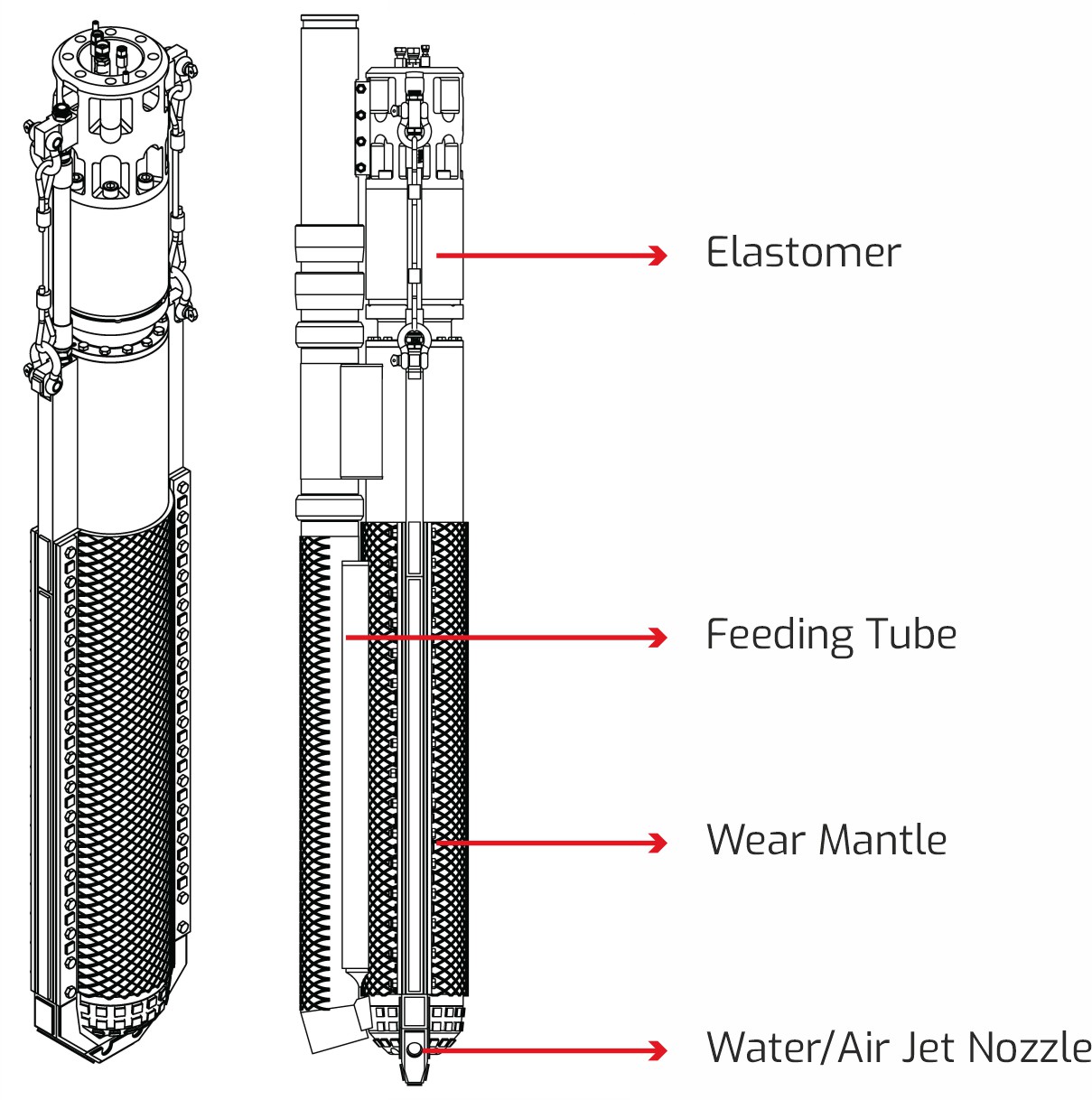
Instead of supplying aggregate from the surface, the bottom feed process transfers gravel through a dedicated feeding tube to the end of the Vibroflot probe. Pressurised air supports the movement of material from the gravel hopper and pressure chamber to the discharge point.
After the probe reaches the required depth, it is raised by a controlled distance and gravel is discharged into the available space. The probe then re-penetrates and compacts the material while pressing it into the surrounding ground. Repeating this sequence constructs the stone column upward to surface level.
This controlled delivery route is particularly important when the bore or cavity cannot remain open reliably enough for aggregate to be fed from ground level.
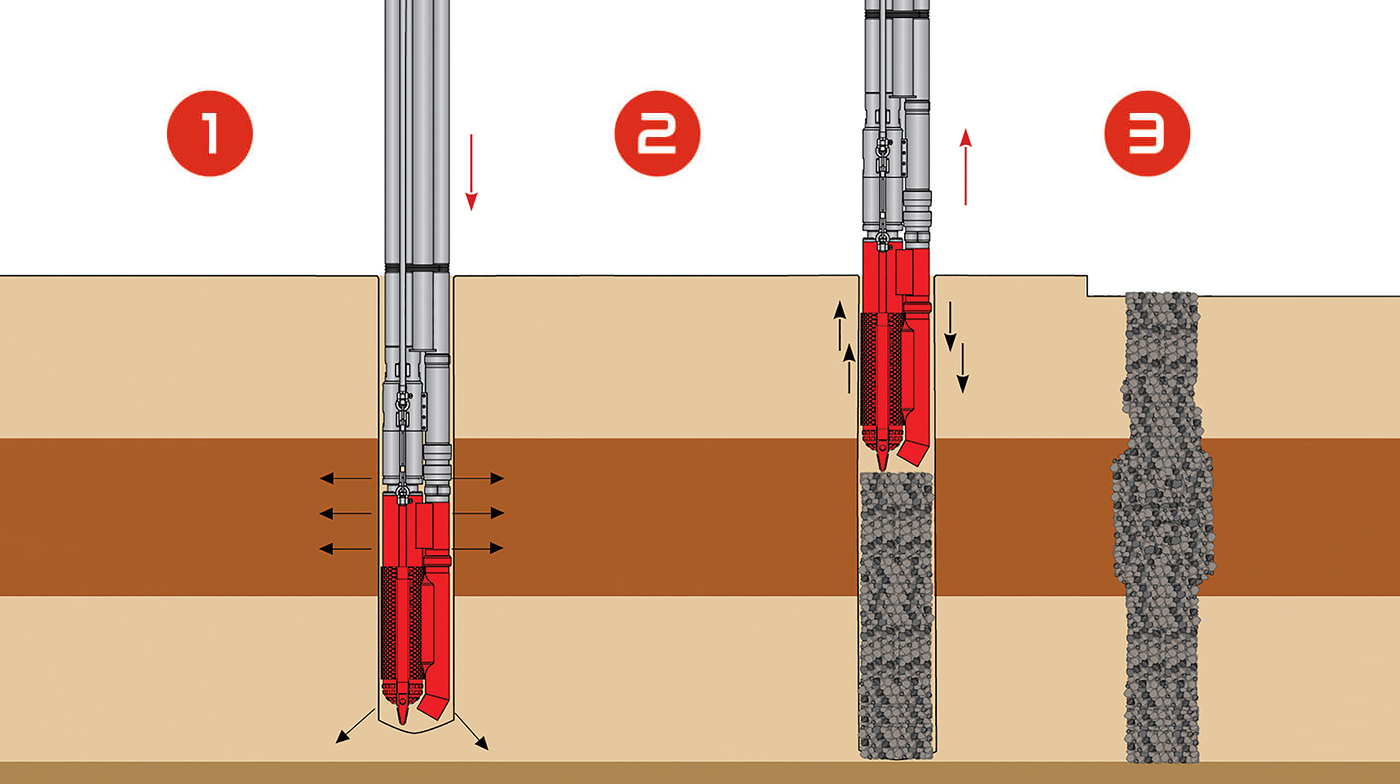
1. Penetration
The OMS vibroflot probe is penetrated to the depth required by the project with the vibration effect and compressed air. Laterally rotated eccentric weights of the probe create an empty space in the soil.
2. Compaction
After reaching the desired depth, the probe is pulled up for a while. The gravel, inside the pressurized silo, is discharged to the empty volume/space by the gravel discharge tube. During the repenetration, the gravel is compacted and pressed into the surrounding soil.
3. Finishing
When repeating the compaction process, the stone column created up a surface level. During the final leveling, the surface is to be re-compacted.
Three OMS Bottom Feed Mounting Configurations
OMS provides three typical mounting options for bottom feed Vibroflot operations.
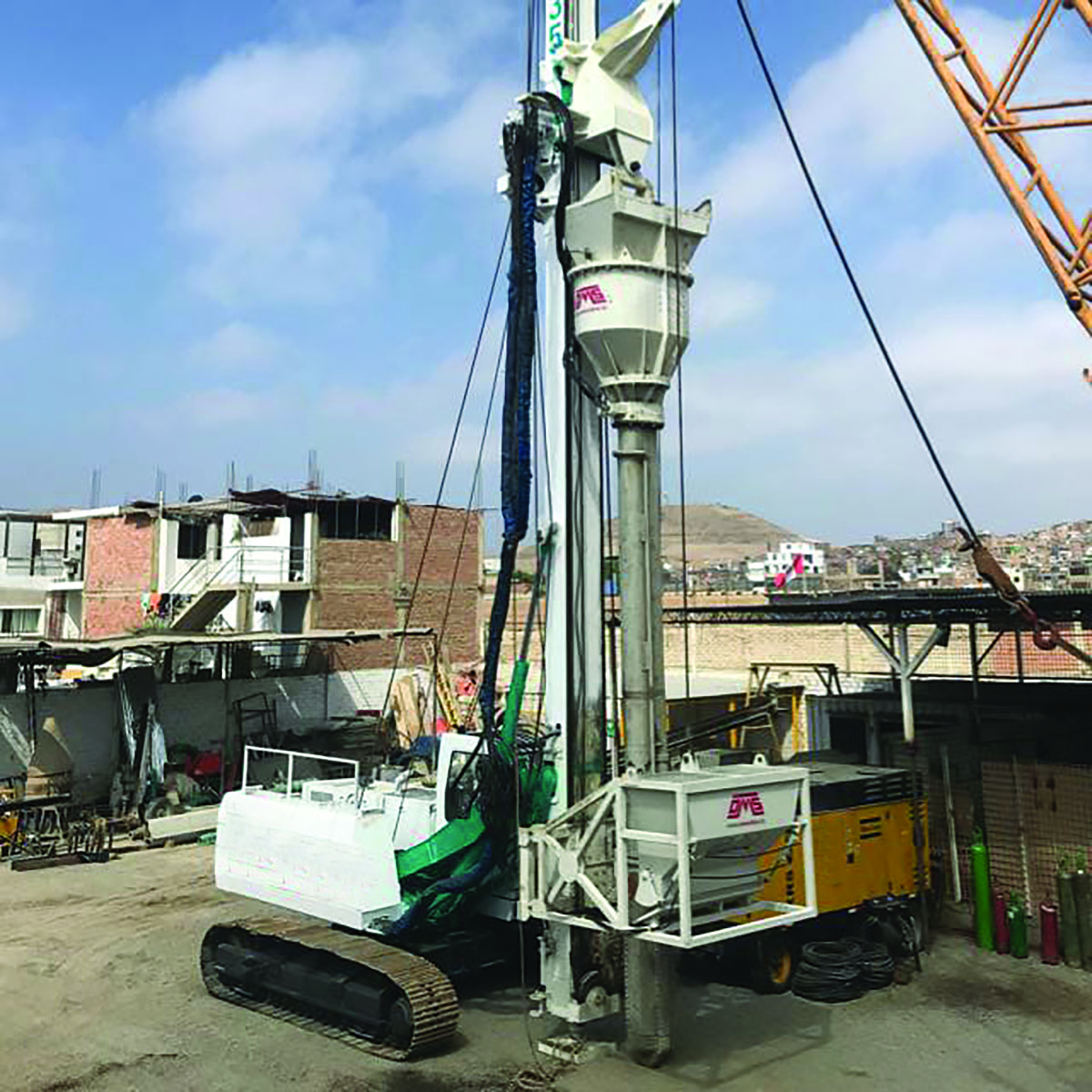
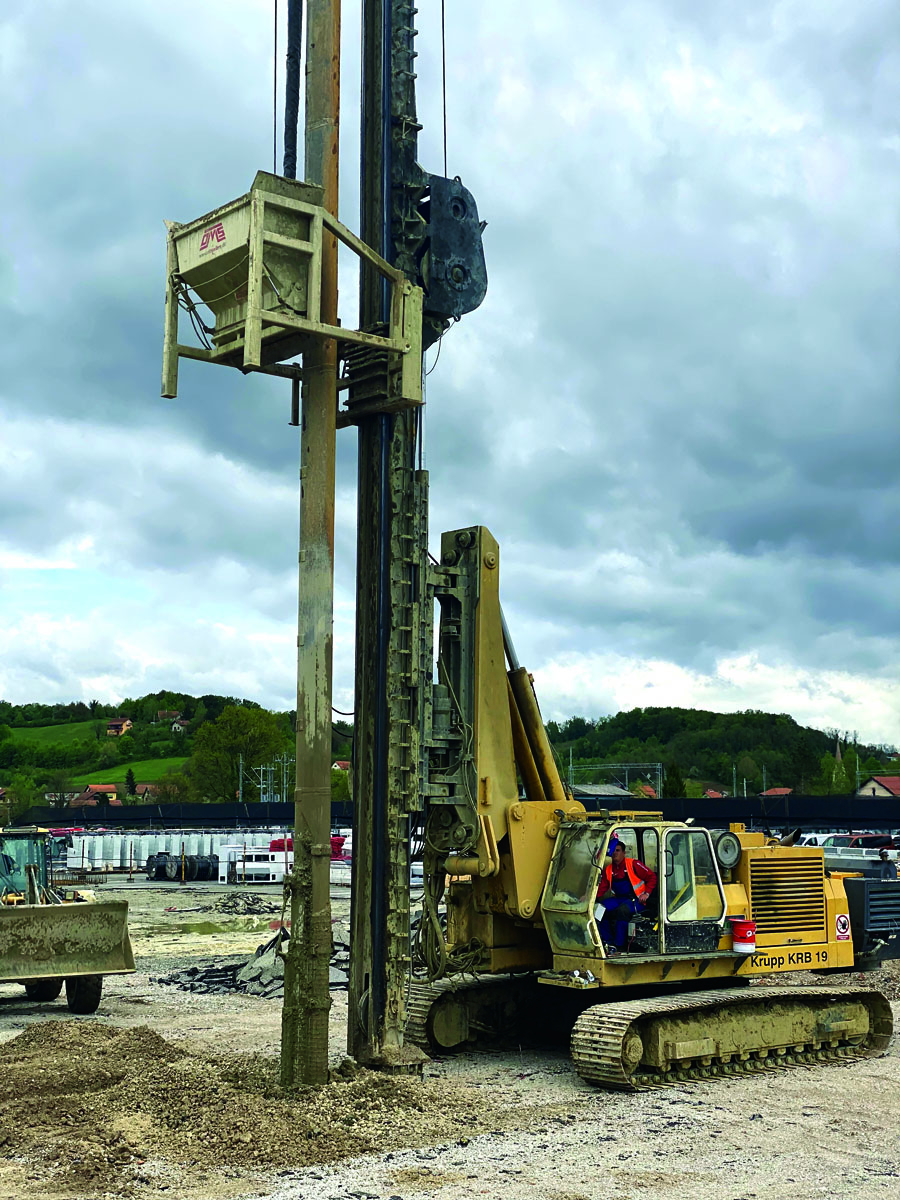
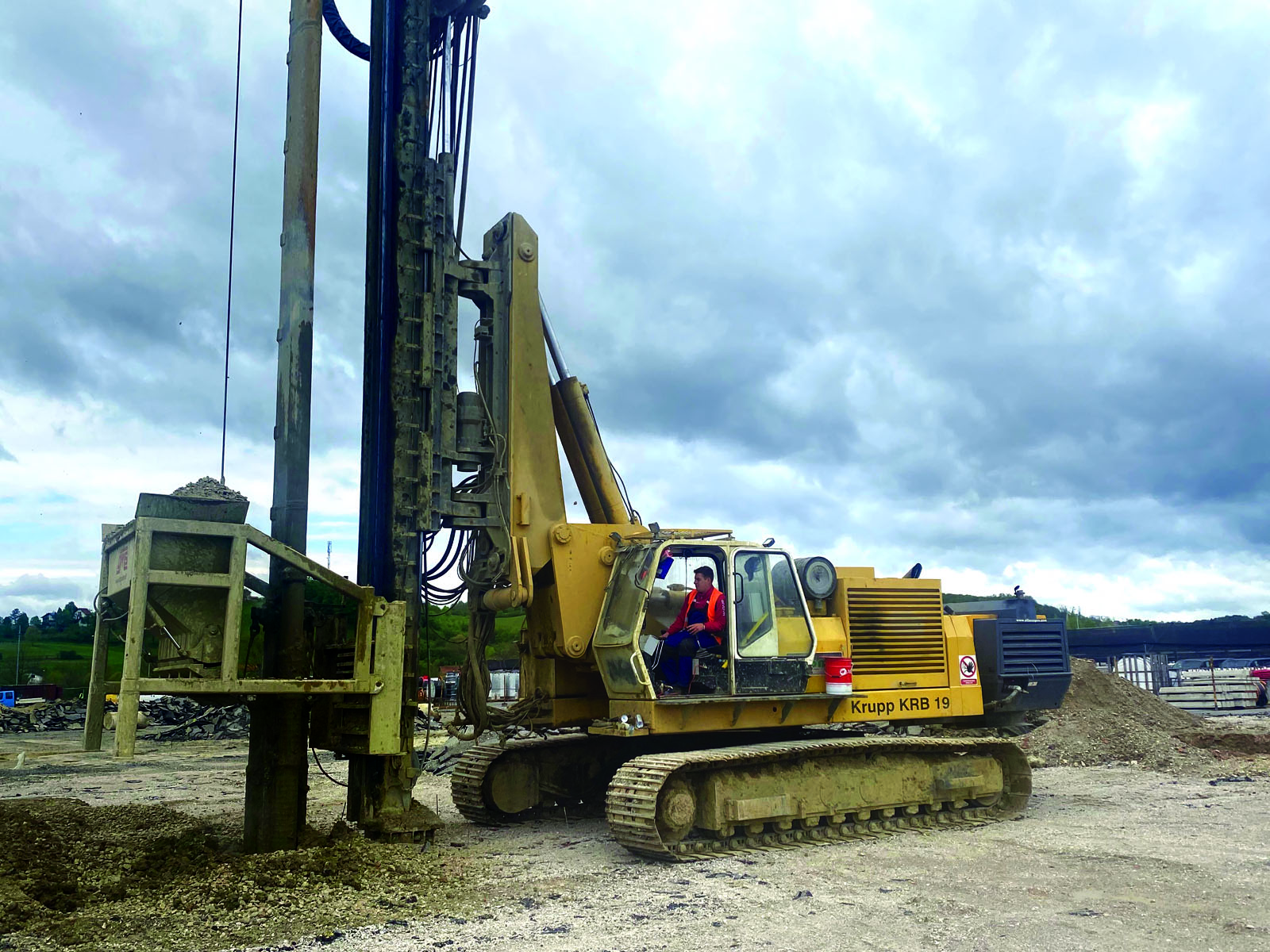
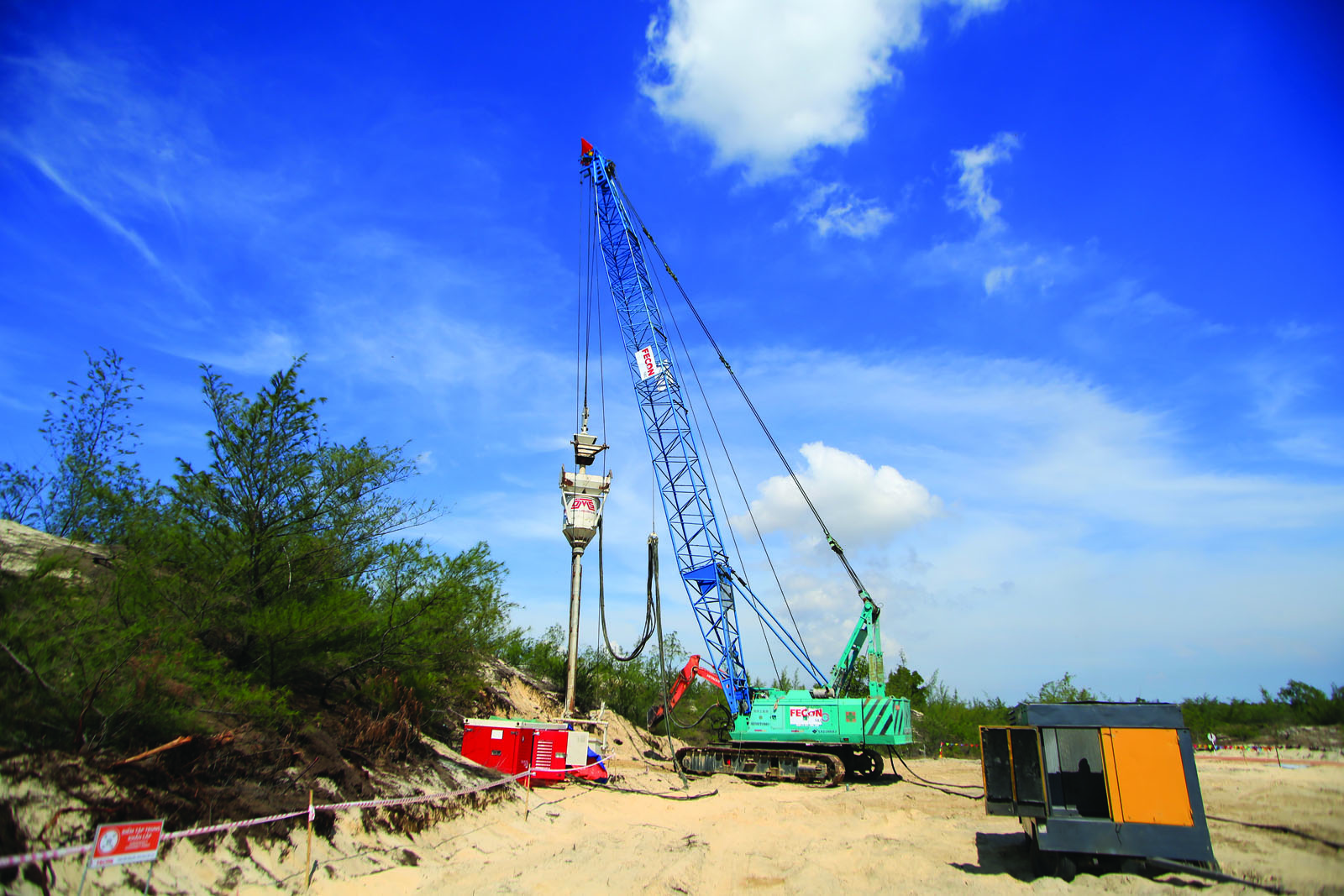
Drill Rig or Leader-Mounted Bottom Feed System
The bottom feed probe and gravel hopper can be mounted on a suitable existing drill rig or leader with support from the OMS technical team.
A major operational advantage is the carrier’s pull-down capability. Additional downward force can support penetration and compaction where the ground provides greater resistance. The leader also guides the assembly and helps maintain controlled vertical movement.
The carrier, leader geometry, pull-down capacity, hydraulic compatibility and required treatment depth must be assessed as an integrated system.

Free-Hanging Bottom Feed System
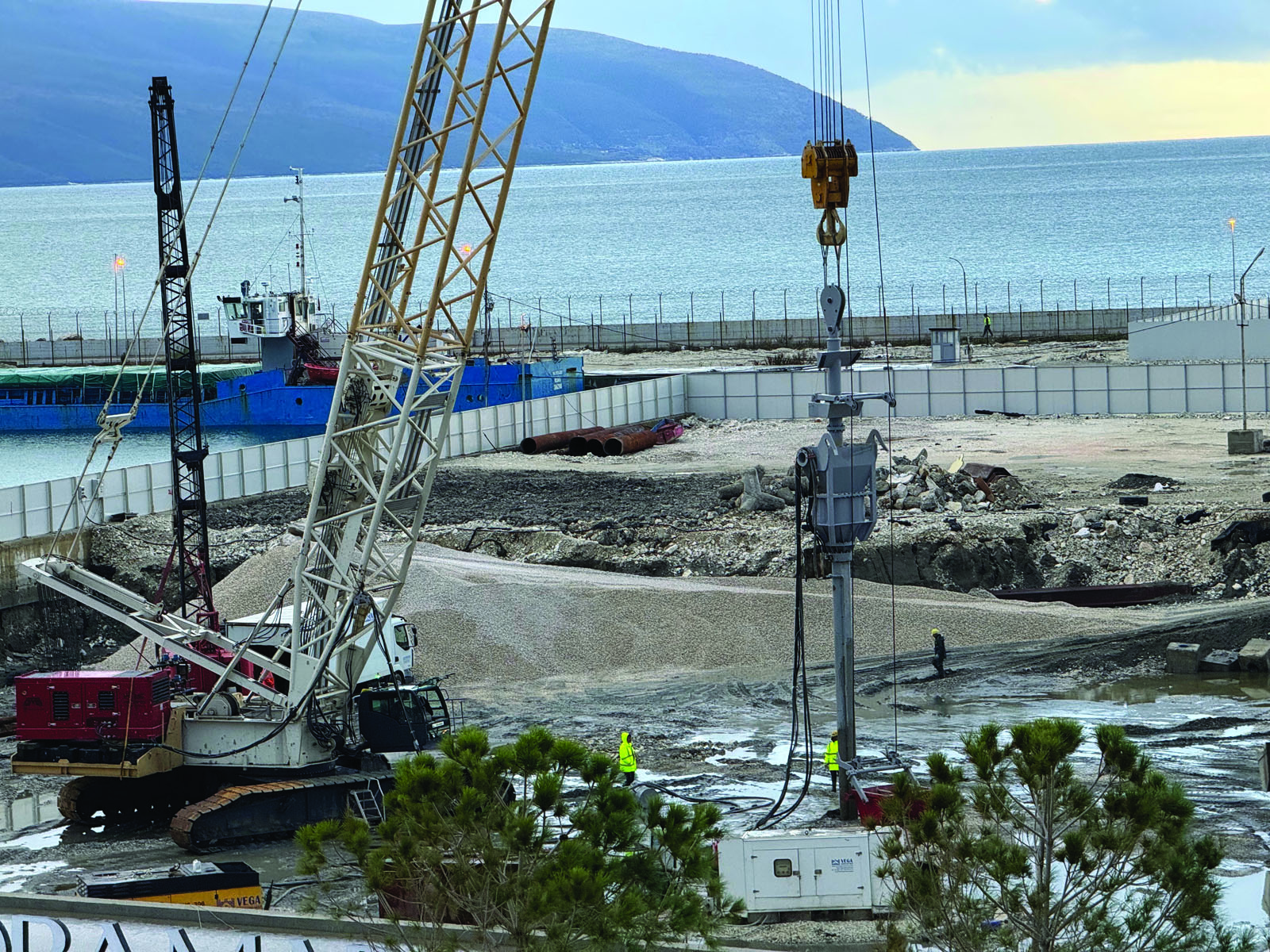
In this arrangement, the OMS bottom feed Vibroflot and gravel hopper are suspended from a crane. The system provides the working reach associated with a crane-supported configuration without requiring a leader.
The crane must have sufficient capacity for the suspended equipment and its operating arrangement. The engineering assessment should include the Vibroflot, follower pipes, feeding system, hopper, hoses, rigging and material-related operating loads.
This configuration can be considered where treatment depth and site layout favour crane operation and the working platform provides suitable access and stability.
Excavator-Mounted Bottom Feed System
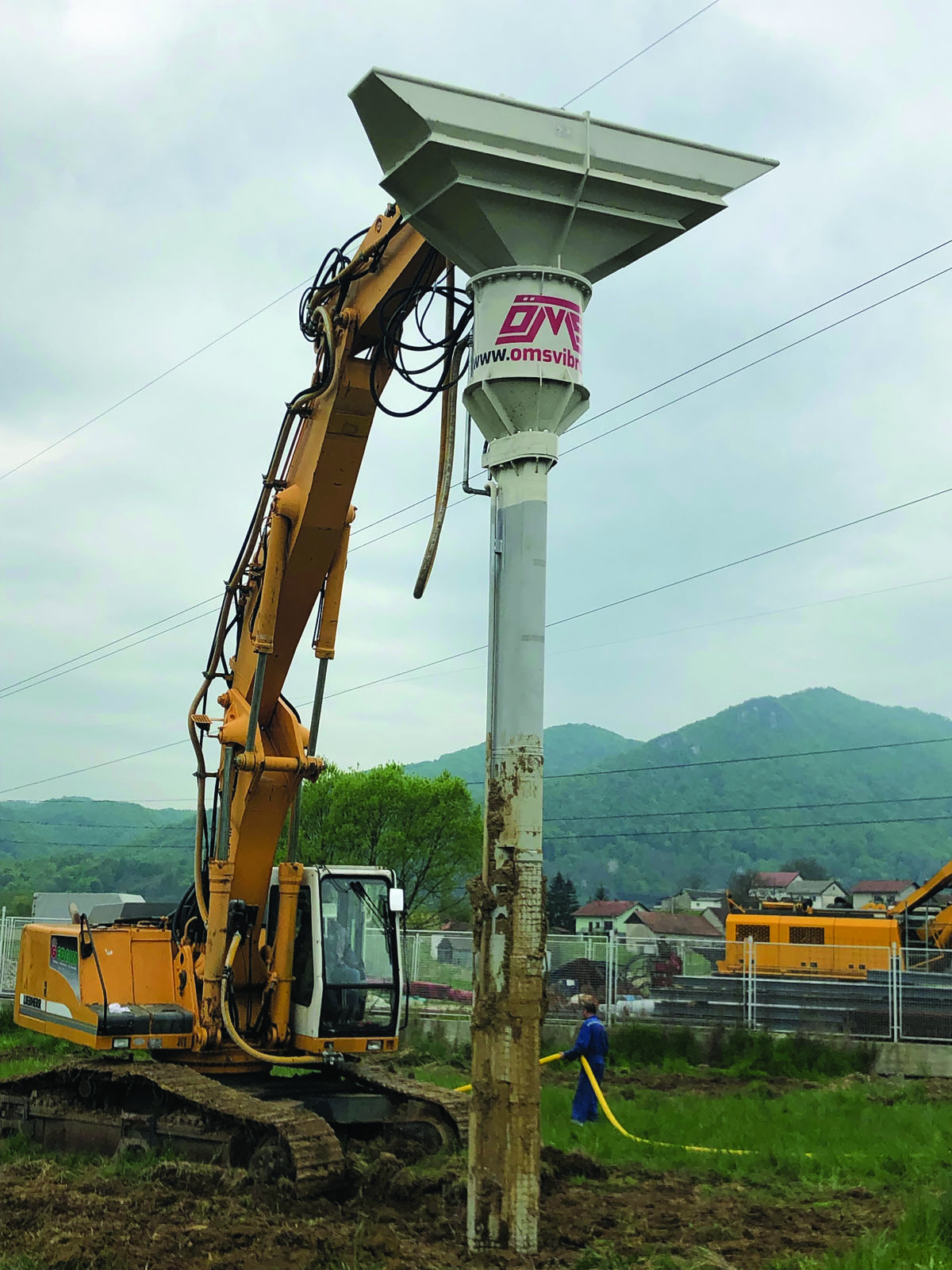
The excavator-mounted OMS Vibroflot uses the excavator’s hydraulic system and provides a comparatively compact carrier arrangement. It can offer practical mobilisation and operation where the required stone column depth falls within the excavator’s working limits.
Excavator selection is decisive. Hydraulic flow, pressure, machine weight, lifting capacity, boom geometry, stability and achievable treatment depth must match the complete Vibroflot system.
OMS technical supervision is required for mounting and system integration. Because excavators have defined reach and operating limits, this configuration generally provides less treatment depth than suitable crane- or leader-based systems.
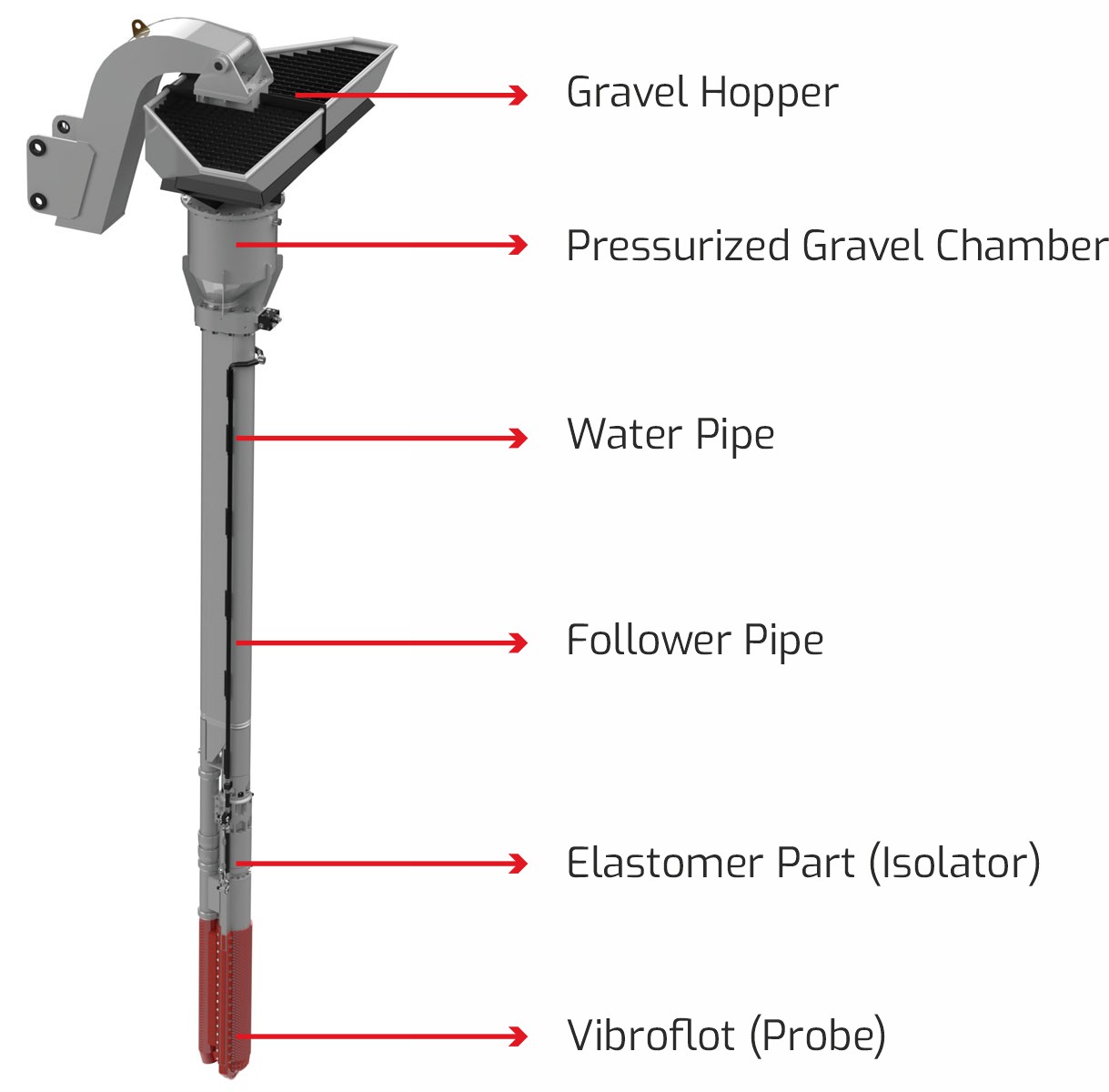
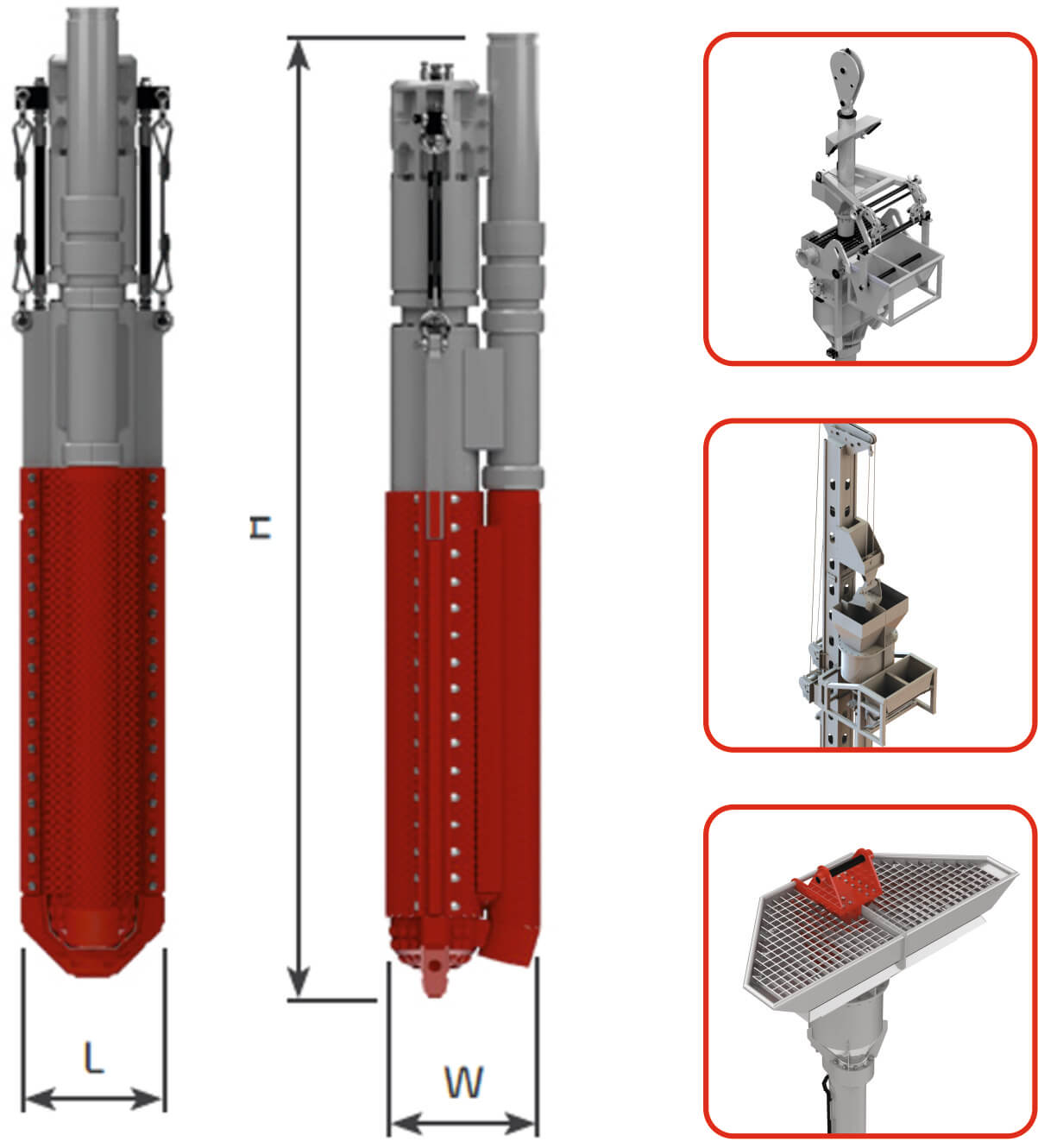
Main Components of an OMS Vibroflot System
Depending on the selected process and mounting arrangement, an OMS Vibroflot system may include:
The component configuration must be defined according to the treatment method rather than selected as isolated equipment.
Monitoring and Reporting
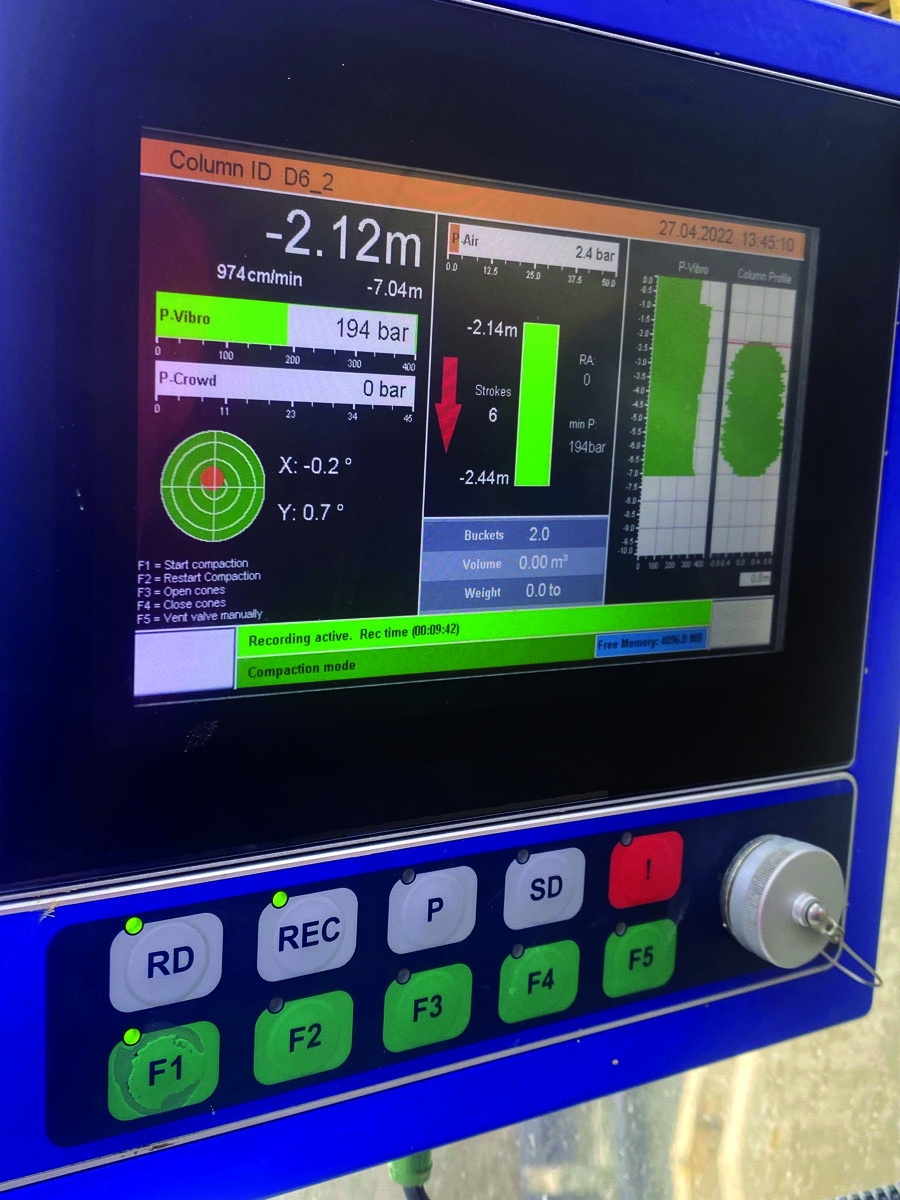
Ground improvement quality depends on repeatable execution at every treatment point. OMS data logger systems support monitoring and recording for both vibro compaction and vibro replacement operations.
The system can record parameters including:
These records help the site team compare completed points, document production quantities and identify deviations in the operating process. Monitoring data should be evaluated together with the project’s geotechnical design, trial-area results and acceptance criteria.

FastWork

Time Manage

Touch Screen

Search

Settings
Report
Selecting Between Top Feed and Bottom Feed
The first selection criterion is the ground response.
Top feed vibro compaction is generally suited to loose, medium- to coarse-grained granular soils that can be densified through vibration. Cohesive soils containing significant silt or clay do not respond to vibratory compaction in the same way.
Bottom feed vibro replacement is intended to form compacted gravel or crushed-stone columns in cohesive soils or granular soils with a high fines content.
After choosing the treatment method, the carrier configuration can be assessed:
Final configuration should follow a project-specific assessment of soil investigation results, treatment depth, aggregate specification, working platform, carrier capacity, hydraulic requirements and production objectives.
Frequently Asked Questions
A top feed system supplies granular material from ground level and is typically associated with vibro compaction. A bottom feed system transfers aggregate through a feeding tube to the end of the probe and is used for vibro replacement stone columns.
Cohesive soils containing significant silt or clay generally do not respond effectively to vibratory densification. A geotechnical assessment may instead identify vibro replacement and stone columns as the appropriate method.
OMS offers drill rig or leader-mounted, crane-suspended free-hanging, and excavator-mounted bottom feed configurations.
The achievable depth depends on excavator reach, boom geometry, hydraulic capability, stability and the physical arrangement of the Vibroflot system. Excavator selection is therefore a critical engineering decision.
A drill rig or leader guides the system and can provide additional pull-down force during penetration and compaction. This can be advantageous where the soil creates greater penetration resistance.
Yes. The OMS data logger can monitor and record parameters such as penetration depth, compaction-point reference, compaction rate and gravel volume.
OMS Vibro Engineering Value
Selecting an OMS Vibroflot system begins with the ground, not the carrier. Loose granular soils may support top feed vibro compaction, while cohesive or high-fines soils may require bottom feed stone columns. The required treatment depth, carrier capacity, penetration resistance, aggregate-delivery method and monitoring plan then determine the appropriate configuration.
OMS provides single and tandem free-hanging top feed solutions together with leader-mounted, free-hanging and excavator-mounted bottom feed systems. For equipment selection and project-specific configuration, contact the OMS Vibro technical team with the available geotechnical data and operational requirements.
Get professional advice to find the most efficient equipment for your application.