
How To Install Wick Drains

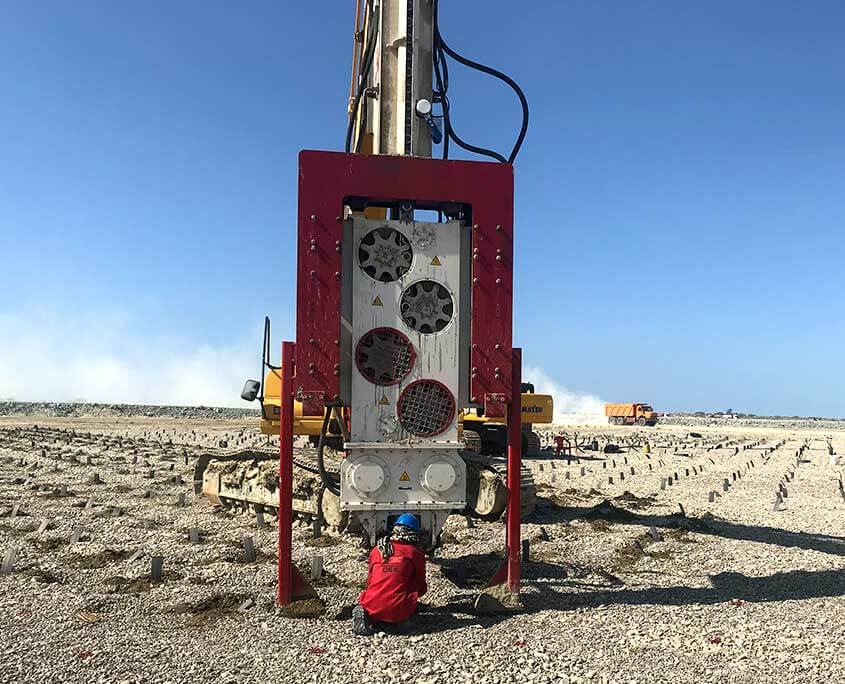
What is Wick Drain?
In this article, OMS takes a closer look at what wick drains are, how wick drains are installed, how to select wick drain installation equipment, and the advantages of wick drain installation machines that help accelerate soil consolidation processes.
What is Wick Drain?
Wick Drain, also known as Prefabricated Vertical Drain (PVD) or Band Drain, consists of polypropylene drainage elements that function as free-flow drainage waterways. These drains contain flexible longitudinal channels designed to provide high water flow capacity.
The wick drains are covered with a fine geosynthetic filter layer. Standard wick drains generally have a width of approximately 100 mm (4 inches) and a wall thickness of 3 mm (1/8 inch), although these specifications may vary depending on special project applications.
According to ASTM D4716 standards, the water drainage capacity of Prefabricated Vertical Drains should be at least 5.7 liters per minute at 275 kPa (40 psi).
How Does Wick Drain Help Consolidate the Soil Faster?
Engineers working on loose and soft soils often face challenges related to long-term settlements and unstable ground conditions. Unpredictable soil settlements create additional labor costs, project delays, and operational inefficiencies.
Traditional soil consolidation methods can take years to achieve sufficient settlement levels. Wick drain systems solve this problem by creating artificial vertical drainage paths that allow groundwater to flow more efficiently through the soil.
Prefabricated Vertical Drains (PVDs) are designed specifically to accelerate water discharge in cohesive and loose soils. By removing groundwater more rapidly, the soil compresses faster and settlement periods are significantly reduced.
These drainage systems not only save time but also reduce operating costs because they:
- Accelerate groundwater discharge
- Increase soil consolidation speed
- Reduce equipment and labor requirements
- Improve project efficiency and cost control
OMS Wick Drain Installation Machines are designed to deliver highly efficient soil consolidation results at low operational cost.
How to Select a Wick Drain Installation Machine?
There are several methods for installing wick drains into the ground, but the most effective approach is to use equipment capable of applying both static and dynamic pressure forces simultaneously, such as OMS Vibro Hammer systems.
Soil geology may vary significantly between layers, and harder or cohesive soil formations can reduce the effectiveness of equipment relying solely on static load. OMS Wick Drain Installation Machines combine static and dynamic force, making them more advantageous compared to conventional systems.
OMS has developed wick drain installation equipment with:
- High water flow capacity
- Durable structures
- High-resistance filtering systems
- Easy installation and operational convenience
The equipment can also be mounted on excavators with sufficient tonnage and capacity, providing flexibility across different project sites.
How to Install Wick Drains?
The wick drain installation process involves several operational steps:
- Wick drains in roll form are loaded into the drain drum located on the machine.
- Sand, gravel, or similar drainage blanket materials are placed on the project ground.
- The installation system is positioned vertically using an excavator.
- A specially designed button-type mandrel is driven into the ground to the required depth using the OMS Wick Drain Installation Machine.
- During installation, the PVD material remains inside the soil.
- The process is repeated according to the predetermined drainage pattern across the project area.
- After installation, the ground is loaded with earth material according to project specifications, allowing groundwater to rise through the drains toward the surface.
Thanks to the Wick Drain method, soil consolidation periods that traditionally required years can now be completed within only a few months.
Wick Drain Installation Video
You can watch the wick drain installation process here:
How To Install Wick Drains Video
Where Are Wick Drains Used?
Wick drains can be used in all applications requiring soil consolidation and ground improvement, including:
- Highway embankments and retaining walls
- Bridge roads and crossings
- Dams
- Railroads
- Airports and ports
- Storage tanks
- Mining waste ponds
Related Articles and Resources
Additional OMS resources related to vibratory pile driving and soil improvement technologies include: